TL;DR: After a fire in Auburn, MA, the fire department clears the structure first, then you call your insurance company to open a claim, then a restoration company to handle smoke and soot cleanup, odor removal, and any rebuild. Don’t wipe soot yourself, it grinds acidic residue deeper into drywall, cabinets, and fabric. Call QCI Restoration at (508) 756-8800 once the fire department has released the property; they coordinate the insurance documentation and the cleanup from there.
If the fire department just cleared your Auburn home and you’re standing in the driveway wondering what happens next, here’s the order that actually protects your claim and your belongings: fire department, insurer, restoration company. Soot is acidic and starts etching into finishes, metal, and grout within hours, so the restoration call shouldn’t wait until morning. This guide covers that call order, what a smoke damage crew actually does, and the specific trouble spots, kitchens, HVAC ducts, contents, that trip people up most.
Who do you call first after a house fire in Auburn, MA?
Call 911 or your local fire department first if you haven’t already, since they have to declare the structure safe to re-enter before anyone, including a restoration crew, can start work. Once you have that clearance, call your homeowners insurance company to open the claim, then call a restoration company to begin mitigation.
That order matters because a restoration crew legally can’t start work inside a structure the fire department hasn’t released. It also protects your claim: most policies expect you to start mitigating damage promptly, and a documented restoration company visit, with photos and a written scope, gives your adjuster something concrete to work from instead of your own notes.
Don’t wait on the insurance call before starting restoration, though. A good restoration company will often start the same conversation with your adjuster, documenting the loss while coordinating coverage, so you’re not stuck managing two phone calls and a contractor search while your house still smells like smoke.
What happens when you call a smoke damage restoration company?
The first call is mostly information gathering: what burned, which rooms are affected, whether the fire department is still on scene, and whether the home is currently livable. Have your insurance policy number and adjuster’s contact ready if you have it, though it’s fine if you don’t yet.
On arrival, the crew does a walkthrough to assess soot type (dry, wet, or protein residue from a kitchen fire behaves differently), checks for smoke penetration into wall cavities and HVAC returns, and photographs everything before touching anything. That documentation becomes the basis of the insurance estimate.
From there, mitigation typically includes HEPA air scrubbing to pull soot particulate out of the air, sealing or removing porous materials that trapped smoke odor, and structural cleaning following the ANSI/IICRC S700 standard for fire and smoke restoration. If the home needs board-up, drywall replacement, or a full rebuild afterward, that’s the advantage of working with one contractor through the whole job instead of juggling a cleanup crew, a general contractor, and a separate odor company, which is the idea behind QCI Restoration’s “One Call Does It All” approach to fire loss.
Why shouldn’t you wipe soot off the walls yourself?
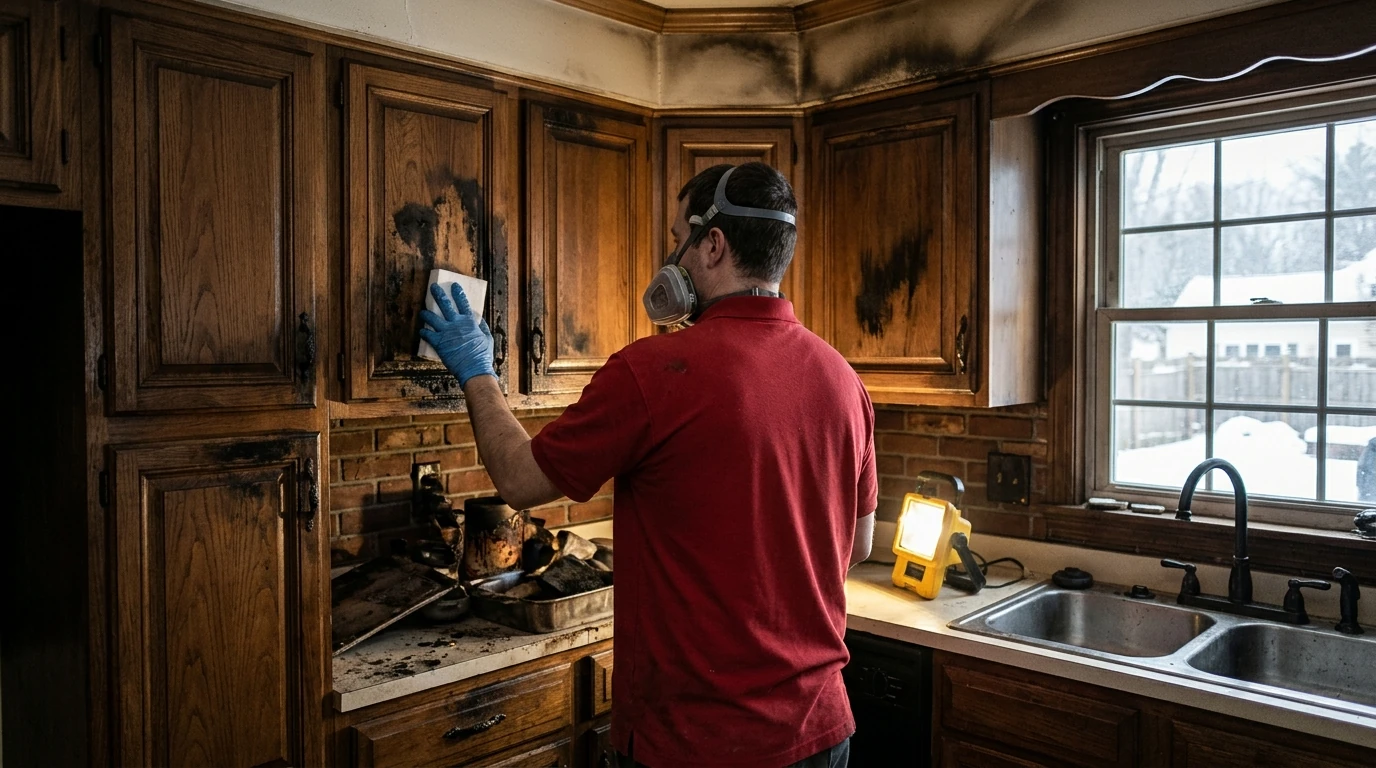
Wiping dry soot with a damp rag or all-purpose cleaner usually smears it, grinding acidic carbon particles into paint, drywall, and grout instead of lifting them off. Soot is mildly corrosive, and the longer it sits combined with ambient humidity, the more it etches into finishes, chrome fixtures, and electronics.
Professional soot removal uses dry chemical sponges first to lift particulate without smearing it, followed by targeted wet cleaning only on surfaces that can tolerate it. Walls, HVAC supply vents, and anything metal (door hinges, faucet fixtures) corrode fastest, so those get prioritized early even in a room that otherwise looks only lightly affected.
If you’ve already tried to clean a room yourself and it looks worse, that’s common, and it’s still fixable. It usually just means more of the surface needs re-cleaning or repainting than if it had been left alone.
Kitchen fire smoke damage: grease residue and cabinet odor
Kitchen fires leave a stickier, harder-to-remove residue than most other house fires because burning grease and cooking oil produce a protein-based smoke film rather than dry soot. That film clings to cabinet faces, inside drawers, and into any porous surface in the room, and it smells stronger than it looks.
Cabinets often look only lightly browned on the surface while the protein residue has already worked into the wood grain and hinges. A restoration crew typically tests a hidden spot first (inside a cabinet door) to judge whether cabinets can be cleaned and refinished or need replacing. Countertops and appliance exteriors are usually salvageable; cabinet interiors and any fabric in the kitchen (curtains, chair cushions) are the items most often replaced rather than cleaned.
How do you get smoke odor out of HVAC ducts and insulation?
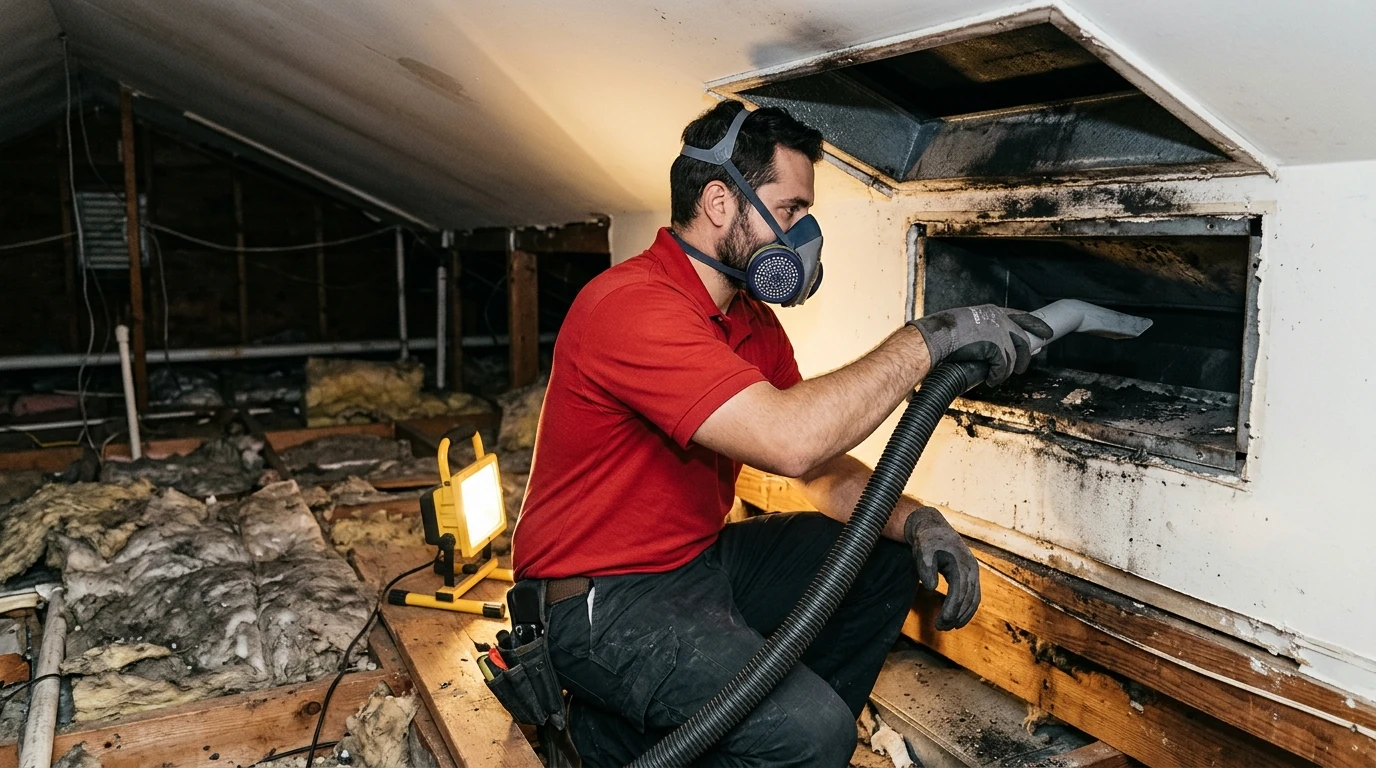
Smoke odor trapped in ductwork and insulation keeps re-circulating through the house every time the furnace or AC runs, which is why a house can still smell smoky weeks after the walls look clean. The HVAC system needs its own cleaning pass, separate from the rooms themselves.
That usually means shutting down the system until it’s inspected, replacing the filter, and running duct cleaning equipment through the supply and return lines to remove soot that settled inside. Attic or wall insulation directly exposed to smoke often gets removed and replaced rather than deodorized, since insulation absorbs odor more than it releases it. Thermal fogging or hydroxyl generators are commonly used afterward to neutralize odor molecules that have worked into remaining porous materials, a step worth reading more about in our guide to the fire damage restoration process.
What should you keep, clean, or throw away after smoke damage?
Most hard, non-porous items, glass, metal, sealed appliances, ceramic, can usually be cleaned and kept. Porous items that absorbed smoke directly, soft furniture, pillows, unsealed food, and anything within a few feet of the fire’s origin, usually can’t be fully deodorized and are safer to replace.
Clothing and linens often do come back with professional ozone or thermal fogging treatment plus specialized laundering, so don’t assume everything fabric is a loss before a contents specialist looks at it. Important documents, photos, and electronics are worth setting aside for a contents restoration assessment rather than deciding on the spot, since cleaning methods differ by material and smoke exposure.
When in doubt, don’t throw it out before someone documents it for the insurance claim. Photograph damaged items in place first; adjusters and contents specialists both need that record.
Do you need board-up service after a fire?
Yes, if the fire department broke windows, cut roof vents, or forced doors during suppression, since an open structure invites weather damage, theft, and further soot contamination from outside air. Board-up is usually one of the first things arranged, often same visit as the initial assessment.
Securing the property isn’t just plywood over a window. It also means tarping roof openings before rain gets in and shutting off utilities if the fire department hasn’t already, both of which prevent a fire loss from turning into a secondary water loss. This is part of why handling fire cleanup through one contractor, rather than separately hiring a board-up company and a restoration crew, tends to move faster.
If you’re also trying to estimate what the full job will run, our fire damage restoration cost guide for Auburn, MA breaks down typical pricing by damage severity.
Once the structure is secured and documented, the rest of the job, deep cleaning, odor removal, and any rebuild, moves in a predictable sequence. Request a smoke damage assessment once the fire department has cleared your property, or call directly to get the process started.
About QCI Restoration
The company is based in Auburn, MA, and answers calls 24/7 with a current Google rating of 4.6 from 135 reviews. Its crews handle fire and smoke damage restoration, odor removal, contents restoration, and board-up and tarping, along with the full rebuild that often follows a house fire, across Auburn, Worcester, and the surrounding Central Massachusetts towns.
Need help now? Call QCI Restoration at (508) 756-8800.