Biohazard Cleanup in Auburn
Biohazard cleanup in Auburn and surrounding areas. Insurance billing accepted. Call (508) 756-8800.
When something unexpected and deeply difficult happens in a home or property, the immediate question isn’t always who to call, it’s whether anyone will handle it with discretion, do it correctly, and leave the space genuinely safe. Biohazard cleanup isn’t a job for a mop and bleach. Blood, bodily fluids, sharps, and other infectious materials require regulated handling, EPA-registered disinfectants, and documented waste disposal, and the window to act before secondary contamination spreads is shorter than most people realize.
What biohazard cleanup actually involves
Biohazard remediation is a regulated process, not a deep clean. The work covers situations ranging from unattended deaths and trauma scenes to hoarding conditions involving bodily fluids, sharps and needle cleanup in residential or commercial spaces, and infectious material cleanup after a medical event.
The goal is twofold: remove all biological contamination to a standard that protects the next person who enters the space, and document that removal in a way that satisfies your insurance carrier and, where applicable, public health requirements.
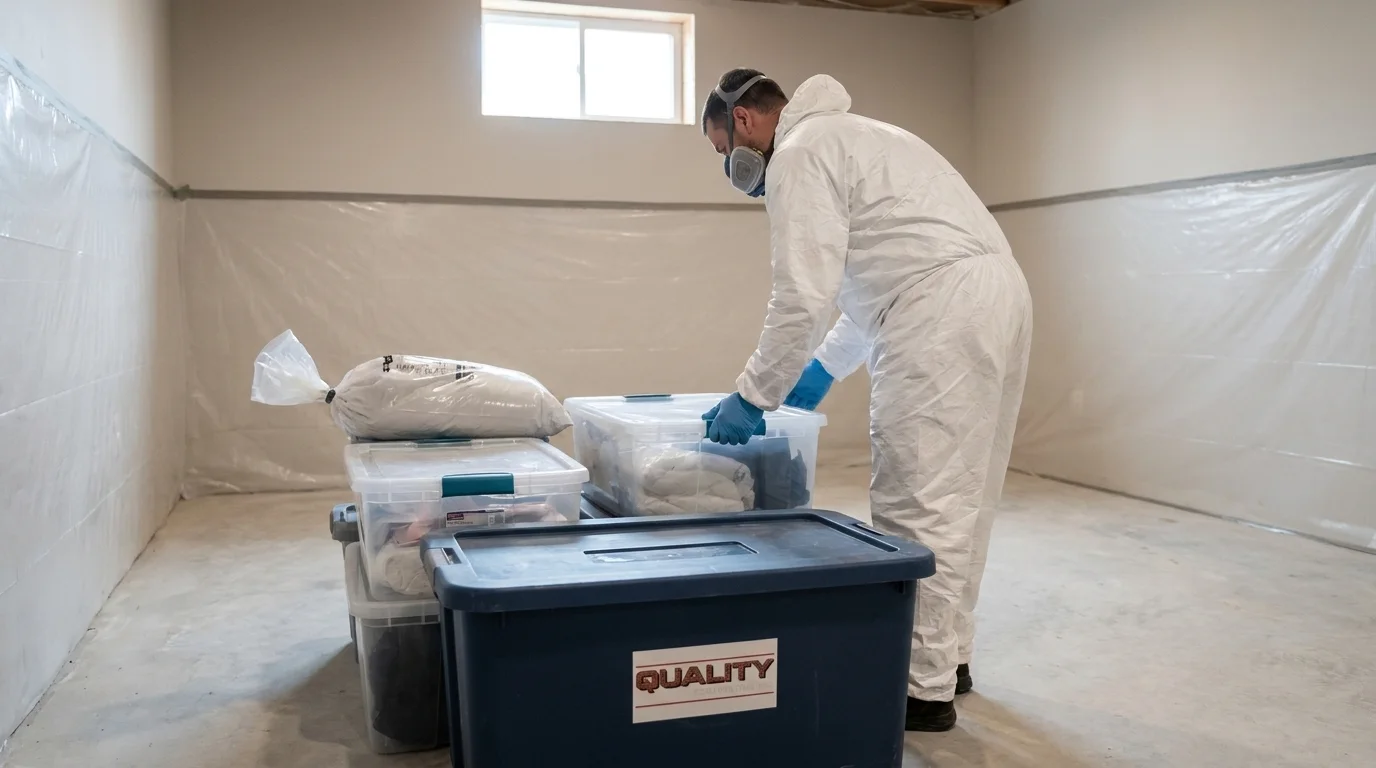
Equipment on a biohazard job includes full personal protective equipment (PPE), Tyvek suits, respirators, and nitrile gloves, along with HEPA-filtered vacuums, ATP meters to verify surface decontamination, and EPA-registered hospital-grade disinfectants. Porous materials that have absorbed biological contamination, carpet, drywall, subfloor, are typically removed rather than cleaned in place. The job ends with a waste manifest: regulated biohazard waste is packaged, labeled, and transported by a licensed medical waste hauler, not placed in a dumpster.
Timeline varies by scope. A single-room blood cleanup with limited surface contact can be completed in a few hours. A larger scene involving structural materials or extended time before discovery may require a multi-day remediation with containment barriers and air filtration running throughout.
Our process
-
PPE staging and containment setup. Before any work begins, the area is assessed, access is restricted, and the crew suits up fully. Containment barriers, typically 6-mil poly sheeting and negative air pressure where needed, prevent cross-contamination to unaffected areas of the property.
-
Biological material removal. Visible contamination and all affected porous materials are removed using regulated protocols. Sharps are handled separately in puncture-resistant containers. Nothing leaves the containment zone unbagged and unlabeled.
-
Enzymatic and disinfectant treatment. After bulk removal, affected surfaces are treated with enzymatic cleaners that break down protein-based biological matter, followed by EPA-registered disinfectants applied at the correct dwell time. This two-step chemistry is what separates a compliant remediation from a surface wipe-down.
-
ATP verification testing. Adenosine triphosphate (ATP) meters measure biological residue at the cellular level, invisible to the eye but detectable by the instrument. Readings are documented before the crew demobilizes.
-
Regulated waste manifest and disposal. All biohazard waste is packaged in red biohazard bags, placed in rigid UN-rated containers, and transported by a licensed medical waste disposal carrier. A waste manifest, a chain-of-custody document, is generated and can be provided to your insurance company or property manager.
What separates a good biohazard response from a bad one
The most common failure in biohazard cleanup is treating it like a cleaning job rather than a remediation job. Crews without proper training often miss contamination that has wicked into subfloor materials beneath carpet, traveled along wall cavities, or pooled in HVAC return pathways. Bleach applied to a surface that still contains organic material is largely ineffective, the enzymatic step has to come first.
Disposal is the other major gap. Biohazard waste transported in standard trash bags or disposed of in a roll-off dumpster is a regulatory violation. Insurance adjusters and property managers increasingly ask for a waste manifest as proof of compliant disposal, without it, a property can face liability even after the visible cleanup is done.
Privacy and discretion matter too. Unmarked vehicles, crew members who don’t discuss the job with neighbors, and direct communication with only the property owner or designated contact are details that separate a professional response from one that adds stress to an already difficult situation.
What does biohazard cleanup cost?
Cost depends on the documented scope of the loss. The size of the affected area, the type of contamination, how long it was present before discovery, and whether structural materials need to be removed all affect what the work requires. We produce a line-item scope with photos and moisture readings formatted for insurance carriers. For insured losses, we bill the carrier directly.
Every loss is different, and Quality Contracting, Inc. provides a written scope of work before any remediation begins. Homeowners insurance frequently covers biohazard cleanup, particularly in cases involving trauma, unattended death, or crime scenes, though coverage depends on your specific policy and the circumstances of the loss.
Service area
Quality Contracting, Inc. is based in Auburn, MA and serves communities across Southern New England, with crews responding across a 50 mile radius of Auburn, including Worcester, Shrewsbury, Westborough, Southborough, Hopkinton, Framingham, Natick, Wellesley, Needham, Newton, and Weston. Individual service-area pages link back here for full process and pricing detail.
When you’re ready to move forward, or just need to understand what the process looks like before making any decisions, call Quality Contracting, Inc. at (508) 756-8800. The conversation is confidential, and the response is handled with the discretion this kind of work requires.
Frequently Asked Questions
Does homeowners insurance cover biohazard cleanup?
What licenses or permits are required to transport biohazard waste in Massachusetts?
How do I know the space is actually safe after cleanup — not just visually clean?
Can biohazard contamination spread to other parts of the home before cleanup begins?
Will the cleanup crew be discreet — will neighbors know what's happening?
Looking for the best biohazard cleanup company in Auburn?
Quality Contracting, Inc. provides biohazard cleanup in Auburn, MA and the surrounding area. Customers rate us 4.6 out of 5 stars across 108 Google reviews. We answer calls 24/7 — call (508) 756-8800 for immediate help.
Need Biohazard Cleanup now?
We respond 24/7 across Auburn and surrounding MA cities.