
Mold Remediation in Auburn
Mold remediation in Auburn and surrounding areas. Insurance billing accepted. Call (508) 756-8800.
That musty smell in the basement that won’t go away after a pipe leak. The dark staining creeping along the drywall behind your washing machine. The persistent cough that clears up when you leave the house. Mold doesn’t announce itself, it spreads quietly, and within 24 to 48 hours of a moisture event, spore colonies can begin establishing on drywall, insulation, and wood framing. By the time it’s visible, the problem is rarely limited to what you can see.
What mold remediation actually involves
Mold remediation is not mold removal in the sense of wiping down a surface and calling it done. The goal is to reduce indoor mold levels to a normal, background concentration, the same range you’d find in outdoor air, and to eliminate the moisture conditions that allowed growth in the first place.
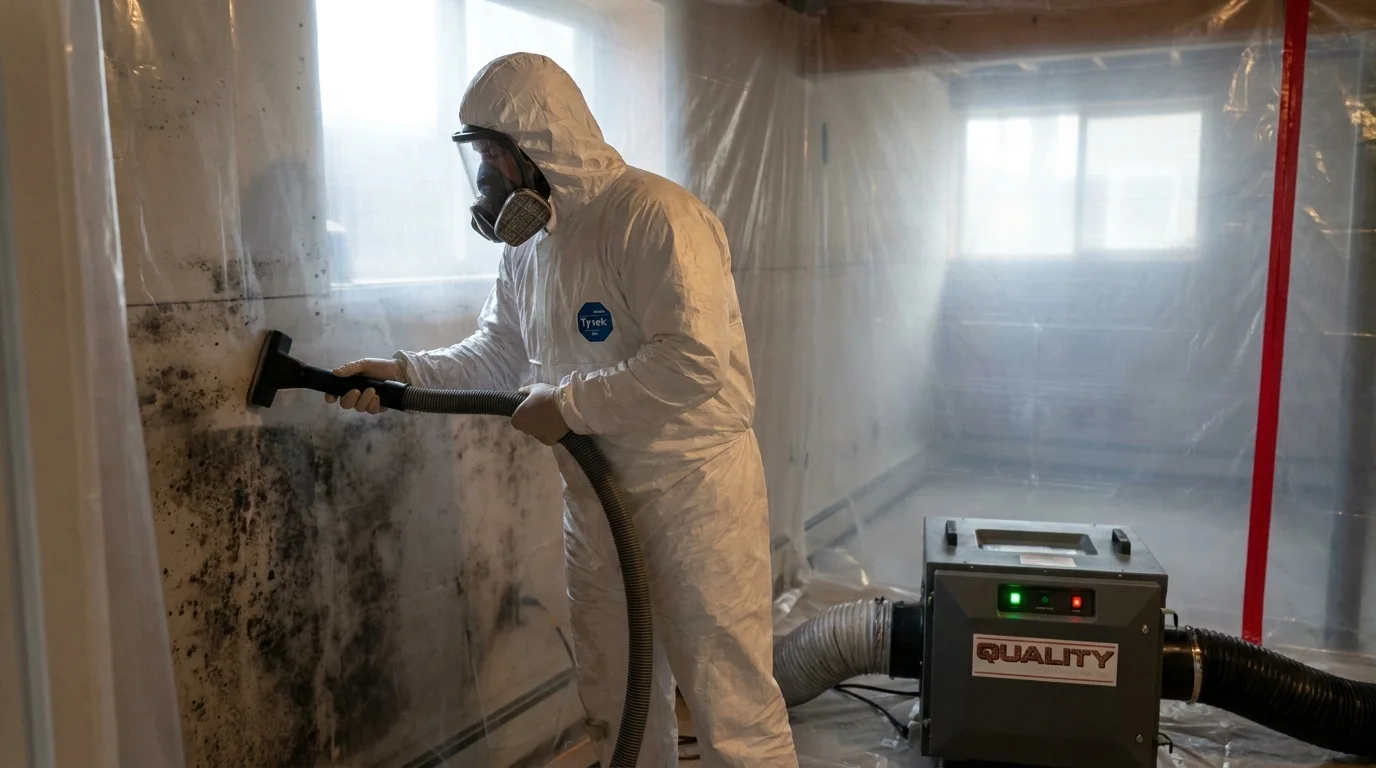
That means physical removal of contaminated materials (drywall, insulation, subfloor sections) when surface cleaning alone won’t reach the colony, combined with HEPA-filtered air scrubbing to capture airborne spores released during the work. Containment barriers using 6-mil polyethylene sheeting and negative air pressure keep spores from migrating into unaffected areas of the home during the remediation itself.
Timeline varies with scope. A single affected wall cavity in a bathroom might be addressed in a day. A crawlspace with widespread growth across floor joists, combined with elevated moisture readings throughout the subfloor, is realistically a multi-day project. Rushing the drying phase before remediation begins is one of the most common ways the problem comes back.
Our process
-
Moisture mapping and visual assessment. Before any physical work begins, the affected area is inspected with moisture meters and thermal imaging to identify the full extent of wet or elevated-moisture materials. Mold follows moisture, finding the boundary of the wet zone determines the scope of remediation.
-
Containment setup. Polyethylene barriers isolate the work area from the rest of the structure. A negative air machine exhausts air from the contained zone to the exterior, maintaining negative pressure so spores cannot migrate outward when materials are disturbed.
-
Removal of contaminated materials. Porous materials, drywall, insulation, carpet, wood framing in severe cases, that cannot be adequately cleaned are removed and bagged in the contained area before transport. Non-porous surfaces are HEPA-vacuumed and treated with an EPA-registered antimicrobial agent.
-
HEPA air scrubbing. Air scrubbers run continuously during and after physical removal, cycling the air in the contained zone multiple times per hour through HEPA filtration to capture residual airborne spores.
-
Clearance verification. After remediation is complete and the area has dried to acceptable moisture levels, a post-remediation verification confirms that visible mold has been eliminated and that conditions no longer support regrowth. This documentation matters for insurance claims and future property transactions.
What separates a good mold remediation response from a bad one
The most common failure in mold remediation is treating the symptom without addressing the source. Painting over mold, fogging with biocides without removing contaminated material, or remediating without first resolving the moisture intrusion guarantees a return visit within months.
A second frequent problem is inadequate containment. When drywall is cut or insulation is disturbed without negative air pressure and proper barriers, spores become airborne and settle throughout the HVAC system and adjacent rooms, turning a localized problem into a whole-house issue. Insurance adjusters and industrial hygienists reviewing a claim will look for documentation that containment was established before demolition began.
On the documentation side, thorough photo documentation of affected materials, moisture readings at the start and end of the project, and a written scope of work are what allow an insurance carrier to process a claim cleanly. Gaps in that record often delay or reduce claim payments.
Finally, clearance testing matters. Remediation without a post-project air sample or visual clearance leaves the homeowner, and the contractor, without evidence that the work was effective.
What does mold remediation cost?
Cost depends on the documented scope of work. The size of the affected area, the materials involved, and whether the underlying moisture source requires structural repair all affect what the job requires. We produce a line-item scope with photos and moisture readings formatted for insurance carriers so your adjuster has a clear, complete record. For insured losses we bill the carrier directly. Call us at (508) 756-8800 and we will walk through the scope with you before any work begins so there are no surprises. Homeowners insurance typically covers mold remediation when it results directly from a covered peril, a sudden pipe burst, for example, but may exclude mold that developed from long-term neglected moisture or flooding in certain policy types. Reviewing your policy’s mold sublimit before filing is worth the call to your agent.
Seasonal and regional considerations
Auburn and the surrounding MetroWest and Worcester County area run humid summers, July and August relative humidity regularly stays above 70% indoors in homes without adequate dehumidification. That humidity window is when crawlspaces, finished basements, and attic sheathing are most vulnerable to condensation-driven mold growth, even without any visible leak. Conversely, late-winter ice dams on older New England rooflines can push meltwater into wall cavities and sit undetected until spring, giving mold a weeks-long head start before a homeowner notices staining.
Service area
Quality Contracting, Inc. is based in Auburn, MA and serves communities throughout Worcester County and the surrounding region. The individual city and town pages linked from this section cover specific service areas in more detail.
If you’re seeing signs of mold growth, discoloration, persistent odor, or a recent water event that wasn’t fully dried, call (508) 756-8800 to request an air quality assessment and get a written scope before the problem spreads further.
Frequently Asked Questions
Does homeowners insurance cover mold remediation?
What's the difference between mold remediation and mold removal — and does the distinction matter?
How do I know the mold remediation actually worked?
Do I need to leave my home during mold remediation?
How quickly does mold grow after a water leak, and does that affect what remediation involves?
Looking for the best mold remediation company in Auburn?
Quality Contracting, Inc. provides mold remediation in Auburn, MA and the surrounding area. Customers rate us 4.6 out of 5 stars across 108 Google reviews. We answer calls 24/7 — call (508) 756-8800 for immediate help.
Need Mold Remediation now?
We respond 24/7 across Auburn and surrounding MA cities.