
Contents Restoration and Storage in Auburn
Contents restoration and storage in Auburn and surrounding areas. Insurance billing accepted. Call (508) 756-8800.
After a fire, flood, or sewage backup, the structure gets most of the attention, but it’s often your furniture, clothing, documents, and irreplaceable personal items that carry the real emotional weight of a loss. Contents restoration is the work of recovering those items: cleaning smoke residue off upholstered chairs, removing odor from clothing that absorbed soot, drying and freeze-drying documents, and storing everything in a climate-controlled facility while your home is being rebuilt. Done right, it saves a significant portion of what most adjusters would otherwise write off as a total loss.
What contents restoration and storage actually involves
Contents restoration is not a single technique, it’s a category of specialized cleaning and preservation processes matched to the type of damage and the material being treated.
After a fire, soft goods like curtains, bedding, and upholstered furniture absorb both wet soot and dry soot. Wet soot from low-oxygen fires leaves a sticky, smeared residue; dry soot from fast-burning synthetic materials is powdery but penetrates fabric fibers deeply. Each requires a different cleaning chemistry. Hard surfaces, wood furniture, cabinetry, decorative items, get wiped, ultrasonic-cleaned, or ozone-treated depending on the depth of odor penetration.
After water damage, the clock matters more than almost anything else. Porous materials like books, artwork, and wood furniture begin to warp within hours of saturation. Mold can begin colonizing wet organic material in as little as 24 to 48 hours under the right temperature and humidity conditions. A contents pack-out, removing items from the loss site to a controlled environment, stops that clock.
For document and photo recovery, freeze-drying (vacuum freeze-drying, specifically) is the industry standard for wet paper goods. Air-drying alone causes irreversible cockling and ink bleed.
Storage during the restoration process is typically in a climate-controlled warehouse, with every item inventoried and photographed before it leaves the property. That inventory becomes part of the insurance claim file.
Our process
-
On-site inventory and condition assessment. Before a single item is moved, every affected piece is photographed, catalogued, and assigned a condition rating. This documentation protects you during the insurance claim and establishes a baseline for what was salvageable versus what was a pre-existing total loss.
-
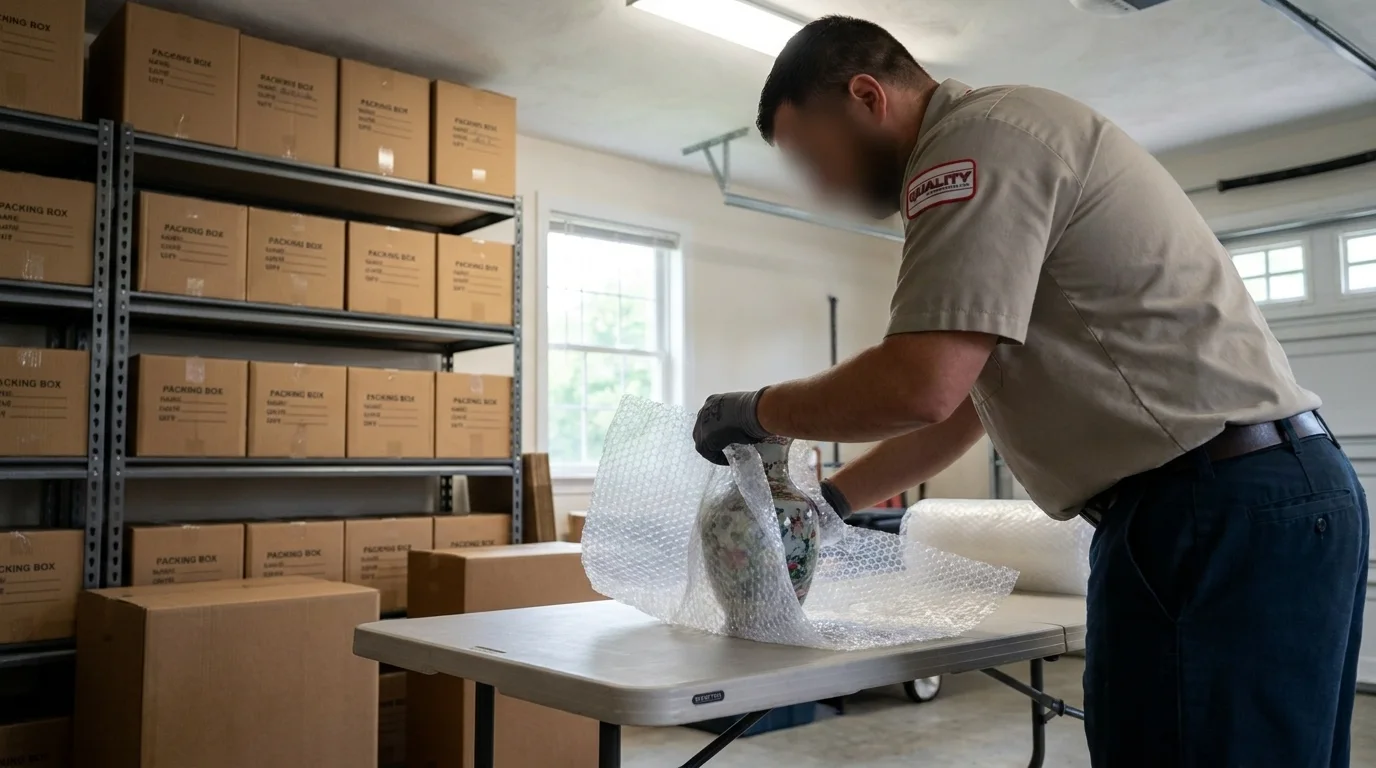
Pack-out and transport. Items are packed using appropriate materials, furniture blankets, acid-free boxes for documents and artwork, sealed poly bags for clothing, and transported to a secure, climate-controlled facility. Fragile or high-value items are handled separately with additional documentation.
-
Cleaning and restoration by material type. Soft goods go through commercial laundering or dry-cleaning processes designed to remove soot, smoke odor, and microbial contamination. Hard surfaces are cleaned using ultrasonic equipment, hand-wiping with appropriate solvents, or thermal fogging for deep odor penetration. Electronics are assessed by a qualified technician before any attempt at restoration, powering on a smoke- or water-damaged device without inspection can cause permanent failure.
-
Deodorization. Odor molecules from smoke and sewage bind to surfaces at a molecular level. Masking sprays do not remove them. Effective deodorization uses ozone treatment, hydroxyl generation, or thermal fogging, often in combination, to break down odor compounds rather than cover them.
-
Secure storage and pack-back. Items remain in climate-controlled storage until the structure is ready for reoccupancy. At pack-back, every item is returned against the original inventory, and any item that could not be restored is documented for the insurance claim with photographs and a written explanation.
What separates a good contents response from a bad one
The most common failure in contents restoration is delayed pack-out. Every hour wet or smoke-affected items remain in a damaged structure, secondary damage accumulates, mold growth on wet fabric, soot migration deeper into upholstery, odor compounds bonding more permanently to wood grain. Experienced operators initiate pack-out as soon as the structure is safe to enter.
A second common failure is inadequate inventory documentation. Insurance adjusters require itemized, photographic proof of condition at the time of loss. A vague list of “miscellaneous household items” will not support a claim for high-value belongings. Proper documentation includes item descriptions, condition ratings, and photographs taken before items leave the property.
A third issue is treating all soot the same. Protein soot, from cooking fires or low-temperature burns of organic material, is nearly invisible but leaves a powerful odor and a greasy film that bonds aggressively to surfaces. Technicians who apply the same dry-sponge technique used for dry soot will smear protein residue deeper into the material. Correct identification of soot type before cleaning begins is a basic competency that separates trained operators from generalists.
Insurance adjusters also look for a clear line between pre-loss condition and loss-caused damage. Thorough before-and-after documentation, combined with a written scope of work, makes the adjuster’s job easier and reduces the likelihood of a disputed claim.
What does contents restoration and storage cost?
Cost depends on the documented scope of the loss. The volume of affected items, the type of damage, and how quickly the pack-out begins all shape what the work involves. We produce a line-item scope with photos and moisture readings formatted for insurance carriers. For insured losses we bill the carrier directly. Homeowners insurance typically covers contents restoration and storage when the loss is caused by a covered peril, fire, certain water events, and storm damage are the most common, and the itemized inventory documentation generated during pack-out is exactly what adjusters need to process that portion of the claim. Quality Contracting, Inc. provides a written scope of work before any restoration begins so there are no surprises.
Seasonal and regional considerations
In central Massachusetts, the combination of cold winters and humid summers creates a specific risk window for contents in a damaged home. A water loss in January in a house that loses heat, due to a burst pipe or fire suppression, can freeze wet contents solid within hours, which actually slows mold growth but causes its own damage to wood, ceramics, and electronics. A summer loss in an unventilated structure, by contrast, can push a wet room past the mold-colonization threshold in under 48 hours. Timing the pack-out to the season and the specific conditions inside the structure is part of the initial assessment.
Older housing stock in Auburn and the surrounding communities, much of it built before 1980, often contains lead paint and asbestos in materials that may be disturbed during a loss. When contents are packed out of a home with known or suspected hazardous materials, proper protocols for cross-contamination prevention apply to the items being removed as well as the structure.
Service area
Quality Contracting, Inc. is based in Auburn, MA and provides contents restoration and storage services across Southern New England, with crews responding across a 50 mile radius of Auburn, including Worcester, Shrewsbury, Westborough, Southborough, Hopkinton, Framingham, Natick, Wellesley, Needham, Newton, and Weston. Individual city and town pages link back to this page for full service details.
If your belongings have been affected by fire, water, or another loss event, call (508) 756-8800 to schedule an on-site contents assessment and get a written scope before anything is moved.
Frequently Asked Questions
Does homeowners insurance cover contents restoration and storage?
What is a contents pack-out, and do I really need one?
How do you clean smoke odor out of upholstered furniture and clothing?
Can water-damaged documents and photographs actually be saved?
How is my inventory documented, and what happens if something can't be restored?
Looking for the best contents restoration and storage company in Auburn?
Quality Contracting, Inc. provides contents restoration and storage in Auburn, MA and the surrounding area. Customers rate us 4.6 out of 5 stars across 108 Google reviews. We answer calls 24/7 — call (508) 756-8800 for immediate help.
Need Contents Restoration and Storage now?
We respond 24/7 across Auburn and surrounding MA cities.