TL;DR: The best smoke damage restoration company in Auburn, MA treats soot as a chemistry problem, not a cleaning problem. They test the soot type before choosing a method, use a deodorizing process that matches the fire, document everything for your insurance adjuster, and give you a written scope before work starts. A contractor who goes straight to paint or an air freshener without testing the soot first is masking the problem, not solving it.
If a stovetop fire or a furnace puff-back left your Auburn home smelling like smoke days after the flames were out, you’re probably getting conflicting advice. One contractor wants to repaint over it. Another wants to run an ozone machine overnight. Your adjuster wants a written scope before approving anything. Smoke damage restoration is its own trade, separate from general cleaning or a repaint job, and knowing what a competent crew actually does is the fastest way to tell a good contractor from one who’s just going to cover the smell and move on.
What separates smoke damage restoration from general cleaning?
Professional smoke damage restoration identifies the type of residue, tests a cleaning method on a hidden spot first, and treats odor at the source instead of covering it up. General cleaning, wiping walls, running a fan, painting over a stain, removes visible soot but leaves odor-causing particles trapped inside porous materials like drywall, insulation, and subfloor. Those particles resurface within weeks, especially once humidity climbs in a New England spring.
The industry reference for this work is the ANSI/IICRC S700 Standard for Professional Fire and Smoke Damage Restoration, which outlines how a technician should classify the fire type, choose a matching cleaning agent, and verify the result before closing out a job. A contractor unfamiliar with that standard is working from guesswork, not a process.
What should you ask before hiring a smoke damage restoration company in Auburn?
The right questions tell you in five minutes whether a company has a real process or is going to wing it. Ask before anyone touches a wall:
- Will you test the soot before choosing a cleaning method, or use the same process on every job?
- What’s your odor-removal method for this specific type of fire, and why that one?
- Do you pack out and clean contents offsite, or only treat what’s left in place?
- Will I get a written scope and line-item estimate before work starts?
- Do you document the damage in a way my insurance adjuster can actually use?
A contractor who answers these clearly, before touching anything, is doing this the right way. One who can’t name their odor-removal method is probably planning to mask it instead of remove it.
Does the type of soot change how it should be cleaned?
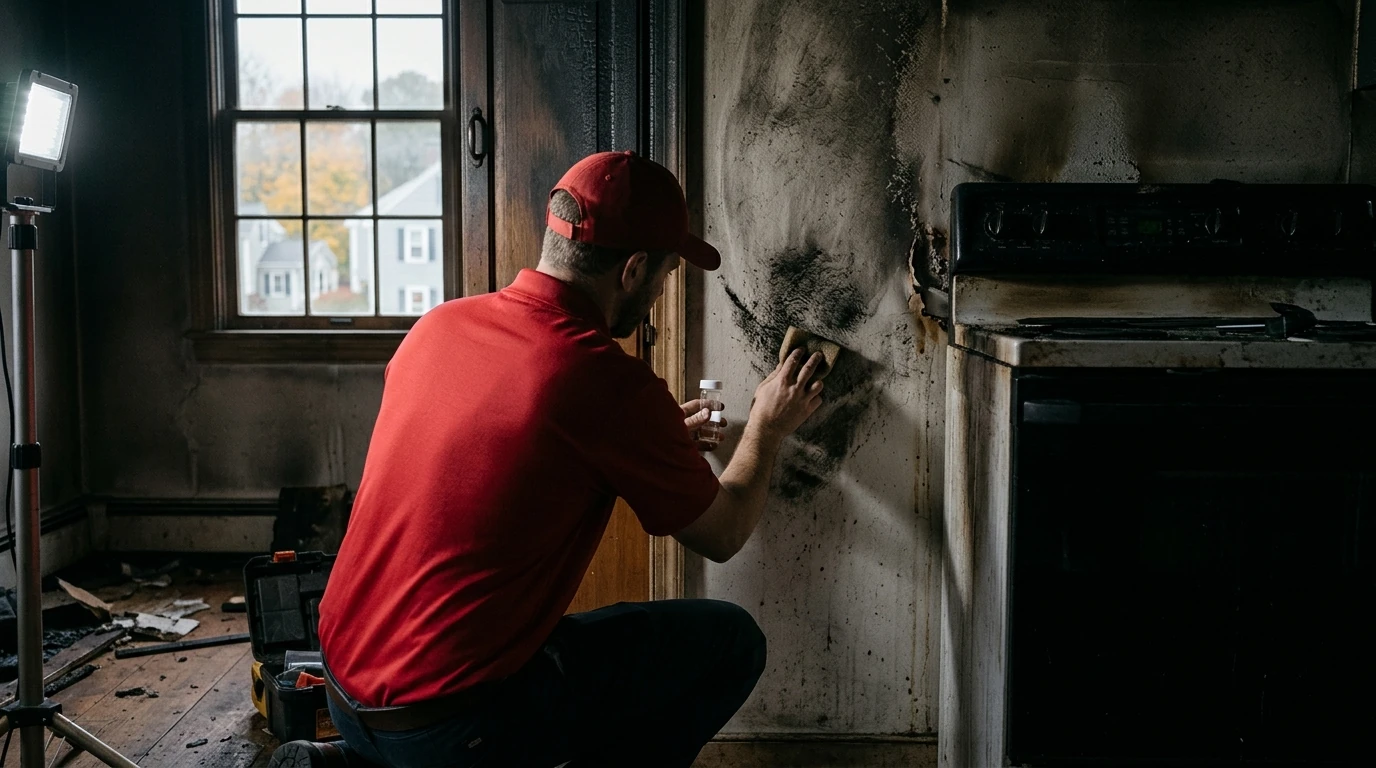
Yes, and using the wrong method on the wrong soot type usually makes the problem worse. Dry soot, from a fast, hot fire burning wood or paper, is powdery and lifts off fairly easily with a dry chemical sponge. Wet soot, from a smoldering fire involving plastics, foam, or synthetic fabrics, is sticky and smears if you wipe it dry, so it needs a solvent-based cleaner instead.
Protein residue is the trickiest. It comes from a kitchen fire involving meat, fat, or oil, and it’s often nearly invisible on cabinets and walls while carrying an intense, sour odor and yellowing finishes over time. It usually needs an enzyme or solvent treatment, and sometimes a sealer afterward to lock in the cleaned surface before repainting.
How do thermal fogging, ozone, and hydroxyl treatments compare for smoke odor?
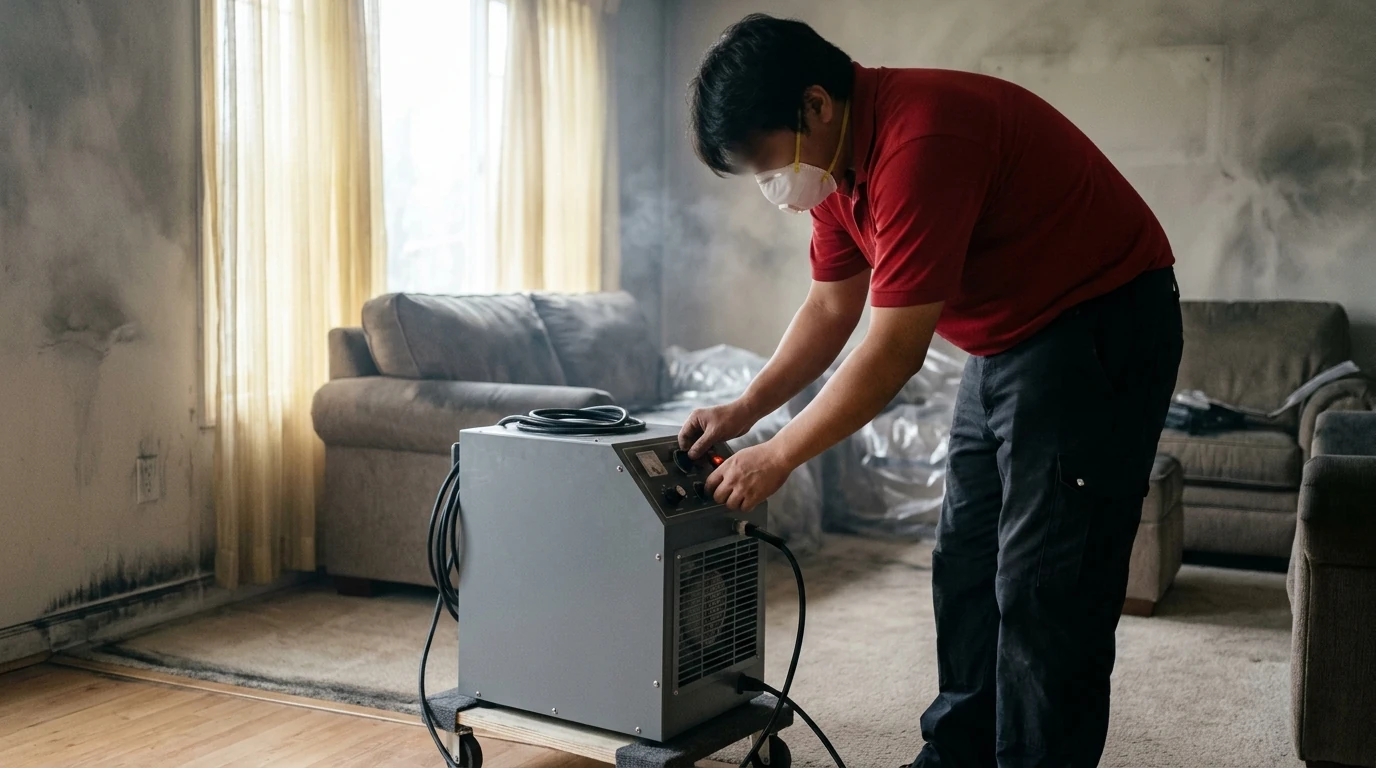
All three are legitimate tools, but they fit different situations. Thermal fogging drives a deodorizing agent into the same cracks, fibers, and HVAC pathways the smoke penetrated, which makes it effective for odor hiding deep in soft materials. Ozone generators oxidize odor molecules quickly and work well for a vacant property, but people, pets, and plants have to be out of the space during treatment because ozone is a lung irritant at the concentrations used. Hydroxyl generators do a similar job more slowly, without the evacuation requirement, which makes them the better choice when a family needs to stay in part of the home during the work. See the EPA’s guidance on indoor air quality for more on how airborne treatments interact with occupied spaces.
How does insurance factor into a smoke damage claim?
Most homeowners policies cover smoke and soot damage from a sudden, accidental fire the same way they cover the structural fire damage itself, according to the Insurance Information Institute. What adjusters push back on is a vague “it still smells like smoke” claim with no documentation behind it. They want photos, a soot-type assessment, and an itemized scope showing what was cleaned versus what had to be replaced.
This is also where masking the odor can work against you. If a contractor paints over smoke staining or relies on an air freshener fogger, and the smell returns, an adjuster who finds the underlying soot was never actually treated may question whether the loss was properly mitigated at all. For a closer look at how fire-related costs break down on an Auburn claim, see our fire damage restoration cost guide.
What are the red flags that a company is masking odor instead of removing it?
The biggest red flag is a company that jumps straight to paint or an air freshener fogger without testing or cleaning the soot underneath first. Odor sealers have a legitimate place in this process, but only as a step after cleaning, never as a replacement for it.
Other warning signs: no soot testing before they quote a price, no respirator or PPE on a crew working around active soot, no written scope before work starts, and same-day “odor’s gone” promises that don’t mention what surfaces were actually cleaned. A thorough job usually means multiple visits, not one afternoon with a fogger.
A smoke damage job done right in Auburn touches several trades at once: structural cleaning, odor treatment, contents handling, and often fire damage repair behind the walls. That’s the idea behind the company’s “One Call Does It All” approach, one phone call covers the soot testing, the odor treatment, the contents restoration, and the rebuild, instead of coordinating four separate contractors while your adjuster waits on paperwork. Call QCI Restoration at (508) 756-8800 for a documented smoke damage assessment.
About QCI Restoration
The company is based in Auburn, Massachusetts, and provides 24/7 emergency response across Central Massachusetts and the MetroWest area. Its services span fire and smoke damage restoration, odor removal and deodorization, contents restoration, and full reconstruction, so a single point of contact can carry a loss from initial mitigation through rebuild. Google reviewers have rated the company 4.6 out of 5 across 135 reviews.