
Quality Contracting, Inc. logo
Post-Construction and Specialty Cleaning in Auburn
Post-Construction and Specialty Cleaning

Post-Construction and Specialty Cleaning in Auburn

Post-construction and specialty cleaning in Auburn and surrounding areas. Insurance billing accepted. Call (508) 756-8800.

The contractors have packed up, the dumpster is gone, and the renovation looks exactly like you imagined — except for the quarter-inch of drywall dust coating every horizontal surface, the adhesive haze on the new windows, the grout smear dried onto the tile you just paid to have set, and the fine silica particulate that has settled into the HVAC returns. Post-construction cleaning is not housekeeping with extra steps. It is a systematic removal of construction byproducts — chemical residues, abrasive particulates, and embedded debris — from finished surfaces that can be permanently scratched, stained, or degraded if the wrong tools or products touch them first.

What post-construction and specialty cleaning actually involves

A final clean after renovation or new construction typically unfolds across two to three passes. The rough clean removes bulk debris: drywall scraps, tape, fasteners, packaging, and the heaviest dust accumulation. The detail clean addresses what the rough pass exposes — paint overspray on hardware, caulk smears on tile, adhesive residue on glass, plaster dust packed into window tracks, and construction film on cabinet interiors. A final inspection pass confirms that surfaces are ready for occupancy, photography, or punch-list sign-off.

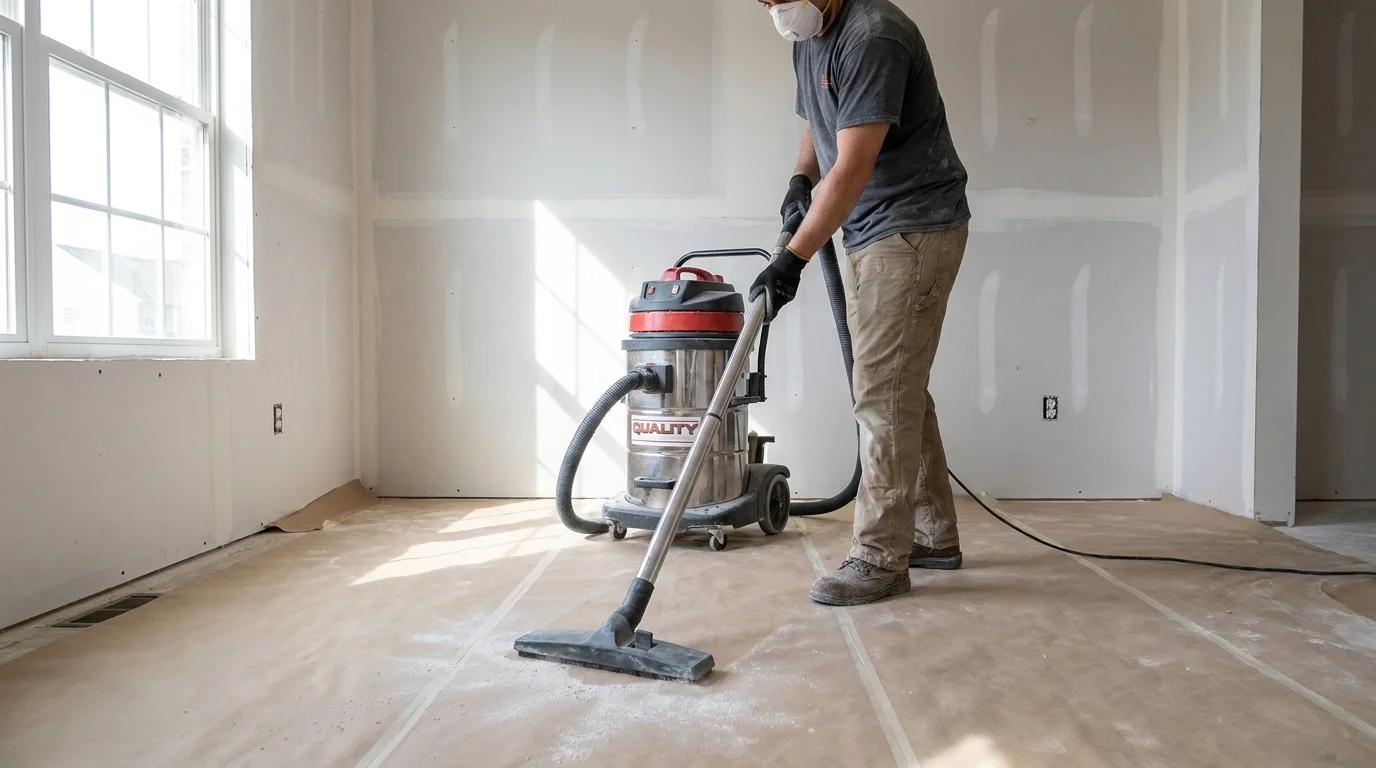
Specialty cleaning extends this into more demanding scenarios: pressure washing exterior flatwork, cleaning post-fire construction residue from a rebuild, removing construction adhesive from hardwood, neutralizing concrete efflorescence on masonry, or deep-cleaning a commercial space before a certificate of occupancy inspection. The equipment involved ranges from HEPA-filtered vacuums (critical for fine silica and drywall dust that standard shop vacs recirculate into the air) to microfiber systems, non-abrasive glass scrapers, pH-appropriate stone cleaners, and commercial-grade degreasers matched to the specific substrate.

Timeline depends heavily on square footage and trade count. A single-room kitchen remodel typically requires four to eight hours of detail cleaning. A full gut renovation of a 2,000-square-foot home — multiple trades, multiple material types — commonly runs two to three days across a crew.

Our process

  1. Pre-clean walkthrough and surface inventory. Before any cleaning begins, the space is walked room by room to catalog surface types (natural stone, engineered hardwood, low-e glass, painted millwork, porcelain tile), identify hazards (exposed fasteners, uncured caulk, fragile tile edges), and note contractor punch-list items so cleaning does not obscure damage that needs to be documented.

  2. Rough debris removal and HEPA vacuuming. All bulk debris is removed. Every surface — walls, ceilings, sills, cabinet interiors, light fixtures — is vacuumed with HEPA-filtered equipment before any wet cleaning begins. Skipping this step and going straight to wet methods grinds abrasive drywall dust into finished surfaces and spreads silica particulate rather than capturing it.

  3. Surface-specific detail cleaning. Each material type gets the product and method it requires. Glass gets razor-blade scraping followed by streak-free cleaning — never abrasive pads. Natural stone gets pH-neutral cleaners, not the vinegar or citrus degreasers that etch calcium-based surfaces. Grout haze on tile is removed with the appropriate dilution of sulfamic or phosphoric acid, applied with dwell time and neutralized — not scrubbed dry. Painted surfaces are wiped with low-moisture methods to avoid raising the sheen or lifting fresh paint.

  4. HVAC and vent cleaning. Construction dust loads HVAC returns and supply registers heavily. Registers are removed, vacuumed, and wiped. If ductwork cleaning is in scope, that is coordinated separately — but at minimum, temporary filters installed during construction are replaced and the system is inspected before it is run in a newly cleaned space.

  5. Final inspection and punch-list documentation. The completed space is walked under raking light to catch streaks, residue, and missed areas. Any pre-existing damage or contractor-caused damage noted during the pre-clean walkthrough is photographed and documented so the property owner has a clear record before occupancy or final contractor payment.

What separates a good post-construction clean from a bad one

The most common failure in post-construction cleaning is sequence: crews that wet-mop before HEPA vacuuming turn drywall dust into a paste that bonds to flooring and is far harder to remove than the original dry powder. The second most common failure is wrong chemistry on the wrong substrate — acidic cleaners etching polished marble or limestone, alkaline degreasers dulling powder-coated hardware, solvent-based adhesive removers lifting the finish on engineered hardwood.

Less experienced operators also miss construction film on windows. The low-e coating on modern insulated glass units is on the interior surface of the outer pane — aggressive scraping or abrasive pads can damage it, voiding the window warranty. Proper technique uses a fresh, single-use razor blade at the correct angle on wet glass only.

For insurance-related post-construction cleaning (cleaning after a rebuild following fire, water, or storm damage), adjusters look for line-item documentation: what surfaces were cleaned, what products were used, and why. A written scope with photos before and after supports the claim and protects the contractor and the homeowner if questions arise later.

What does post-construction and specialty cleaning cost?

Typical costs run on square footage, trade complexity, and surface type — a tile-heavy bathroom addition cleans differently than an open-plan wood-floor renovation. Most property owners pay somewhere in the ranges below; these are industry-typical figures, not a quote.

ScenarioTypical range
Single room or small addition (under 400 sq ft)$300 – $700
Mid-size renovation (400–1,000 sq ft)$700 – $1,800
Full home new construction or gut renovation (1,000–2,500 sq ft)$1,800 – $4,500
Large custom home or multi-unit (2,500+ sq ft)$4,500 – $10,000+
Commercial space / certificate of occupancy clean$0.15 – $0.40 per sq ft
Specialty surface treatment (stone restoration, adhesive removal, etc.)$150 – $600 per area

Every project is different, and Quality Contracting, Inc. provides a written scope before work begins so there are no surprises. Homeowners insurance typically covers post-construction cleaning when it is part of a covered loss repair — such as cleaning after a fire rebuild or water damage restoration — but does not cover elective renovation cleaning; your adjuster can confirm what your specific policy includes.

Seasonal and regional considerations

In central Massachusetts, construction seasons compress around the weather. Exterior flatwork — concrete, pavers, masonry — poured in late fall can develop heavy efflorescence over the winter as freeze-thaw cycles push mineral salts to the surface; that needs to be addressed before any sealer is applied in spring. Interior renovations done during heating season tend to accumulate more static-charged drywall dust because low humidity increases electrostatic adhesion to surfaces — HEPA vacuuming with anti-static microfiber matters more in January than in July. If your project wrapped during a humid Auburn summer, check that construction moisture in new drywall or concrete has fully cured before sealing floors or painting — trapping moisture under a finish coat creates its own problems.

Service area

Quality Contracting, Inc. is based in Auburn, MA and serves Worcester, Shrewsbury, Millbury, Oxford, Sutton, Grafton, Northborough, and surrounding communities throughout central Massachusetts. City-specific pages for post-construction and specialty cleaning in each area link back here for full service details.

When the dust has settled — literally — call (508) 756-8800 to schedule your post-construction walkthrough and get a written scope for your final clean.

Frequently Asked Questions

Does homeowners insurance cover post-construction and specialty cleaning?
It depends on why the cleaning is needed. When post-construction cleaning is part of a covered loss repair — for example, cleaning a rebuilt kitchen after a covered fire or cleaning new construction materials installed during a water damage restoration — it is typically a covered line item. Elective renovation cleaning is generally not covered. Quality Contracting, Inc. works with all insurance carriers and handles claim documentation, including the surface-by-surface line items and before-and-after photos that adjusters require to approve cleaning costs.
Why can't I just use my regular cleaning crew for a post-construction final clean?
Standard cleaning crews are equipped for maintenance cleaning — dust, grime, and surface soil on finished spaces. Post-construction cleaning requires HEPA-filtered vacuums to capture fine silica and drywall dust without recirculating it, pH-matched chemistry for specific substrates like natural stone and low-e glass, and razor-blade technique for construction film on windows. Using the wrong tools or products on newly finished surfaces can permanently scratch glass, etch stone, or lift fresh paint before the property owner ever moves in.
What is 'construction film' on windows and how is it removed safely?
Construction film is a combination of drywall dust, paint overspray, caulk mist, and airborne adhesive that bonds to glass during a renovation. It looks like a hazy or faintly textured coating that does not wipe off with glass cleaner. Safe removal requires a fresh single-use razor blade held at a low angle on thoroughly wet glass — never dry scraping, and never abrasive pads, which can damage the low-e coating on modern insulated glass units and void the window warranty. The glass is then cleaned with a streak-free solution and inspected under raking light.
How do you clean grout haze off new tile without damaging the tile or grout?
Grout haze is the thin film of cement-based grout residue that dries on tile faces after installation. The correct removal method depends on the grout type and tile material, but typically involves a diluted sulfamic or phosphoric acid solution applied with dwell time, then scrubbed and thoroughly neutralized with clean water. On natural stone tile — marble, travertine, limestone — acid-based haze removers can etch the surface, so a non-acidic enzymatic or mechanical approach is used instead. Timing matters too: haze removed within the first 10 days is far easier to address than haze that has cured for weeks.
What should I do with the HVAC system after a renovation before running it in the cleaned space?
At minimum, any temporary construction filters should be replaced and supply and return registers should be vacuumed and wiped before the system is run. Running an HVAC system through registers loaded with drywall dust redistributes fine particulate — including silica — throughout a freshly cleaned space and into the duct system. For major renovations, a duct inspection is worth scheduling before the first full heating or cooling cycle. Quality Contracting, Inc. addresses registers as part of the post-construction cleaning scope and can coordinate duct cleaning if the inspection warrants it.
Why Choose Us

Looking for the best post-construction and specialty cleaning company in Auburn?

Quality Contracting, Inc. provides post-construction and specialty cleaning in Auburn, MA and the surrounding area. We answer calls 24/7 — call (508) 756-8800 for immediate help.

Need Post-Construction and Specialty Cleaning now?

We respond 24/7 across Auburn and surrounding MA cities.

Call Now: (508) 756-8800