
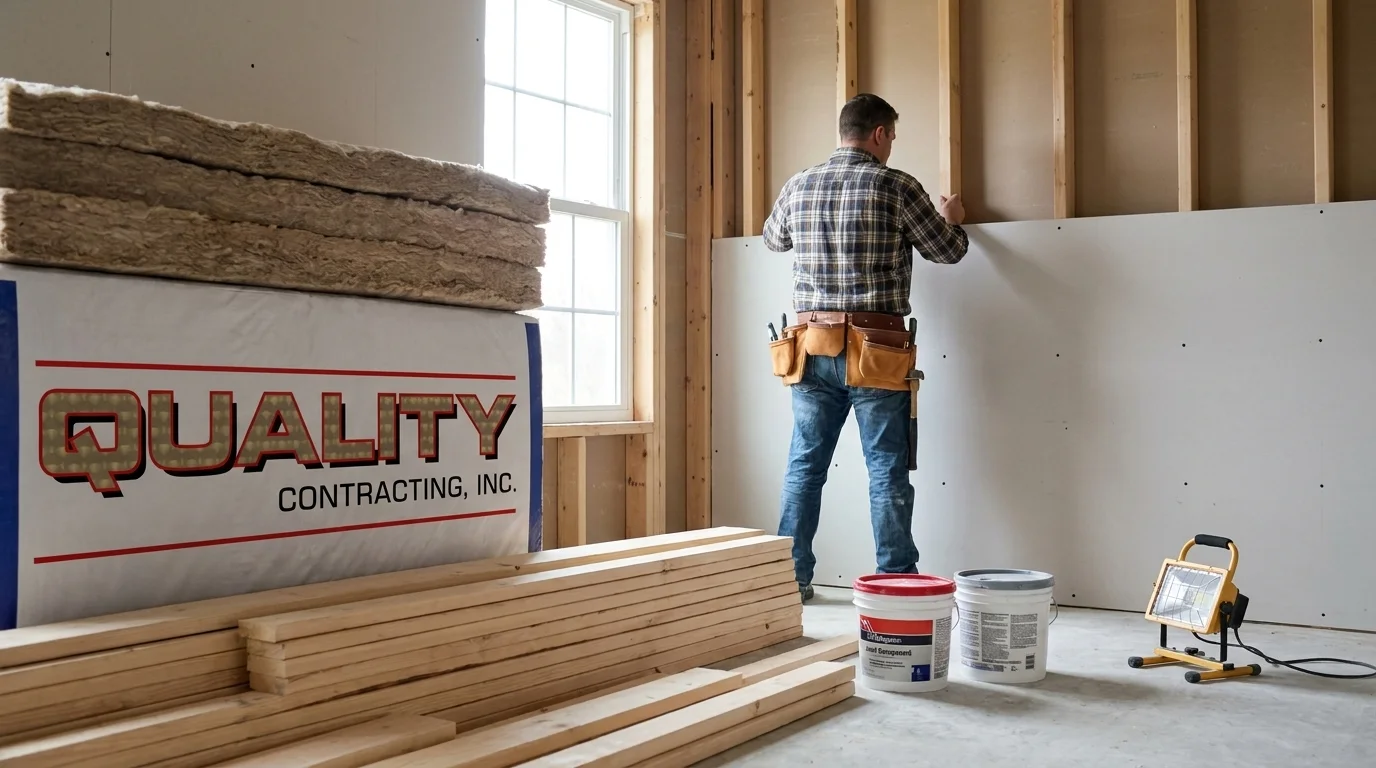
Renovations, Remodels and General Contracting in Auburn
Renovations, remodels and general contracting in Auburn and surrounding areas. Insurance billing accepted. Call (508) 756-8800.
What Renovations, Remodels and General Contracting actually involves
You finally have a clear picture of what you want: a kitchen that actually works for your family, a bathroom that doesn’t feel like it belongs in a different decade, or a room addition that gives the house room to breathe. What you don’t want is three separate contractors who never talk to each other, a permit that stalls for six weeks because the paperwork was wrong, or finishes that don’t match because nobody coordinated the sequencing. That’s the problem a single general contractor solves. One point of contact manages the full scope, from the first set of drawings through the final walk-through, keeping trades on schedule and materials on order.
General contracting for renovations and remodels covers a wider range of work than most homeowners expect. A kitchen remodel isn’t just new cabinets and countertops: it typically involves electrical upgrades for modern appliance loads, plumbing rough-in adjustments when the island moves, ventilation work for a new range hood, and drywall repair behind every surface that gets touched. A bathroom remodel adds waterproofing membranes, cement board substrate, and sometimes structural reinforcement when a soaking tub replaces a standard alcove. Post-damage rebuild work layers permitting and insurance documentation requirements on top of all of that. The scope defines the timeline, and the timeline defines the budget.
For most residential projects in the Auburn area, a single-room remodel runs four to eight weeks from permit approval to punch list. Whole-floor renovations or additions stretch longer depending on structural complexity and municipal review cycles.
Our process
-
Scope development and design coordination. Before any numbers are put on paper, the project gets measured, photographed, and documented in detail. Existing conditions matter: a 1960s ranch in Auburn may have knob-and-tube wiring behind the walls that a kitchen remodel will expose, and that has to be in the scope before pricing begins. Design intent, material selections, and finish grades are confirmed in writing so there are no surprises mid-project.
-
Permitting and pre-construction planning. Building permits are pulled for every project that requires them, which in Massachusetts includes structural work, electrical, plumbing, and HVAC changes. The permit application package includes plans, energy compliance documentation where required, and contractor license information. Scheduling is built around the permit timeline, not the other way around.
-
Demolition and rough-work sequencing. Selective demolition exposes what the walls, floors, and ceilings are actually hiding. Framing modifications, structural headers, subfloor repairs, and rough mechanical work happen in the correct sequence so inspections can be called in without rework. This phase is where coordination between trades is most critical and where uncoordinated projects most often fall apart.
-
Inspections and in-wall close-up. Rough electrical, plumbing, and framing inspections are scheduled and passed before any insulation or drywall goes up. Skipping or rushing this step is the single most common source of expensive rework on remodel projects. Once walls are closed, everything is confirmed and documented.
-
Finish installation and punch list. Tile, cabinetry, countertops, fixtures, trim, and paint are installed in the correct sequence to protect finished surfaces. A formal punch list walk-through at the end of the project captures any items that need correction before the job is considered complete.
What separates a good renovation from a bad one
The most common failure point in residential remodeling isn’t the visible finish work: it’s what happens before the walls close. Subfloor moisture that wasn’t checked before new flooring went down. A structural header that was undersized because nobody pulled the load calculation. Tile set over a substrate that flexes, so the grout cracks within a year. These aren’t rare edge cases; they’re predictable outcomes when sequencing is rushed or inspections are treated as obstacles rather than checkpoints.
For post-damage rebuild work specifically, insurance adjusters look for a written scope of work that matches the documented loss, line-item material specifications, and photo documentation of existing conditions before work begins. A scope that’s vague on materials or skips pre-existing condition documentation creates disputes at the supplement stage that delay payment and extend the project timeline.
On kitchen and bathroom remodels, the detail that separates durable work from work that looks good on day one is waterproofing. A tiled shower without a properly lapped, sloped, and tested waterproofing membrane will fail. It may take two years or five, but it will fail, and the repair cost typically exceeds the original tile budget.
What does Renovations, Remodels and General Contracting cost?
Typical costs for residential renovation and remodeling work vary significantly based on scope, existing conditions, material selections, and permit complexity. Most homeowners pay somewhere in the ranges below for common project types, though every project is different and actual costs depend on what’s found during scope development.
| Scenario | Typical industry range |
|---|---|
| Bathroom remodel, cosmetic (fixtures, tile, vanity) | $8,000 – $18,000 |
| Bathroom remodel, full gut and reconfigure | $18,000 – $40,000 |
| Kitchen remodel, mid-grade materials | $25,000 – $55,000 |
| Kitchen remodel, full reconfiguration with structural work | $50,000 – $100,000+ |
| Single-room addition (per square foot, finished) | $200 – $350/sq ft |
| Post-damage rebuild, single room | $12,000 – $45,000 |
These are typical industry figures, not quotes. Quality Contracting, Inc. provides a written scope of work with line-item pricing before any work begins. Homeowners insurance typically covers post-damage rebuild costs when the loss is a covered peril, but standard policies do not cover elective renovations or upgrades beyond the pre-loss condition.
Seasonal and regional considerations
In central Massachusetts, the window between late spring and early fall is when most exterior work and additions move fastest, since concrete, roofing, and exterior framing all have temperature and moisture constraints. Interior remodels run year-round, but heating season adds a step: plastic sheating and temporary heat management matter when exterior walls are open in January. Auburn’s housing stock skews toward mid-century construction, which means lead paint and asbestos-containing materials are a realistic finding on any project touching pre-1980 surfaces. Proper testing and handling protocols are part of responsible scope development here, not an afterthought.
Service area
Quality Contracting, Inc. is based in Auburn, MA and serves homeowners and property owners throughout the surrounding communities, including Worcester, Millbury, Sutton, Oxford, Leicester, Grafton, and Shrewsbury. City-specific pages detail any local permitting or code considerations relevant to your project location.
Ready to turn a rough idea into a written scope? Call Quality Contracting, Inc. at (508) 756-8800 to schedule your project consultation and get a clear picture of what your renovation will actually involve.
Frequently Asked Questions
Does homeowners insurance cover renovation or rebuild work after a covered loss?
Do I need a building permit for a kitchen or bathroom remodel in Massachusetts?
What is a punch list, and when does it happen?
How do you handle unexpected conditions found during demolition, like old wiring or water damage behind walls?
What's the difference between a general contractor and a subcontractor, and why does it matter for my project?
Looking for the best renovations, remodels and general contracting company in Auburn?
Quality Contracting, Inc. provides renovations, remodels and general contracting in Auburn, MA and the surrounding area. Customers rate us 4.6 out of 5 stars across 108 Google reviews. We answer calls 24/7 — call (508) 756-8800 for immediate help.
Need Renovations, Remodels and General Contracting now?
We respond 24/7 across Auburn and surrounding MA cities.
Related Coverage
- Our Restoration Services
- Contact Quality Contracting, Inc.
- Renovations, Remodels and General Contracting in Bellingham
- Renovations, Remodels and General Contracting in East Douglas
- Renovations, Remodels and General Contracting in Fiskdale
- Renovations, Remodels and General Contracting in Framingham
- Renovations, Remodels and General Contracting in Franklin Town
- Renovations, Remodels and General Contracting in Hopkinton
- Renovations, Remodels and General Contracting in Hudson
- Renovations, Remodels and General Contracting in Leominster
- Renovations, Remodels and General Contracting in Marlborough
- Renovations, Remodels and General Contracting in Maynard
- Renovations, Remodels and General Contracting in Milford
- Renovations, Remodels and General Contracting in Natick