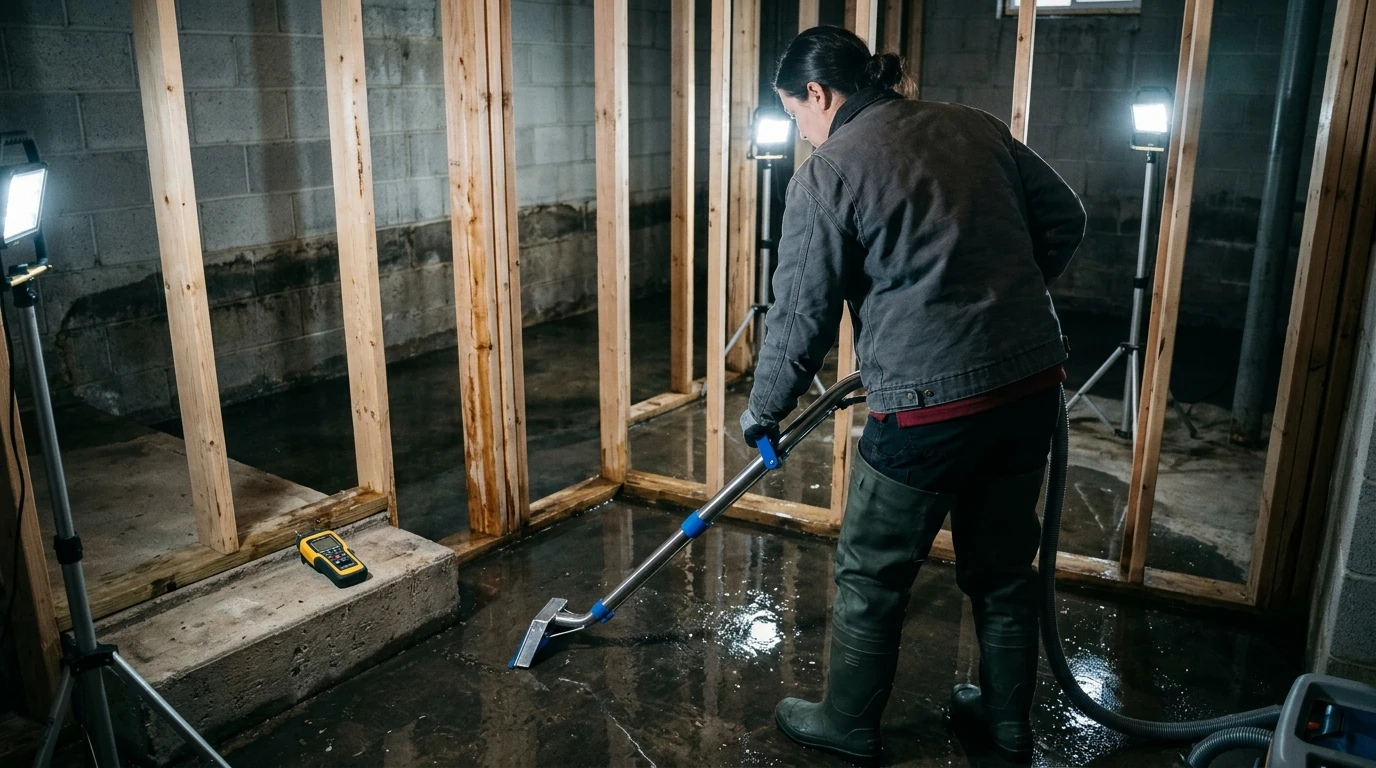
For a flooded basement in Auburn, MA, call QCI Restoration at (508) 756-8800. They answer the phone 24/7 and carry a 4.5-star rating across 123 Google reviews, and they’re a solid first call whether the water came from a failed sump pump, heavy rain, or a sewer backup. But before you pick up the phone, there’s one question that matters more than any other: is it safe to go down there?
Is it safe to go into a flooded basement right now?
Not if the water is anywhere near an outlet, the electrical panel, or a gas appliance. Standing water and electricity don’t mix, and a submerged outlet strip or panel can energize the water itself.
If you can see water touching outlets, baseboard heaters, or the panel box, stay upstairs. Cut power at the main breaker only if you can reach it without stepping into water. If you can’t reach it safely, call the utility company to shut off power at the meter before anyone goes near the basement. The same caution applies to a gas water heater or furnace sitting in standing water: leave it alone and let a professional handle it.
Once power is confirmed off, or the water never reached anything electrical, it’s safe to assess from the stairs. Don’t wade through unknown water just to see how bad it is. If it came from a drain, a toilet, or outside grade, it may carry contamination you can’t see.
Sump pump failed, heavy rain, or sewer backup: who handles which?
The cause determines who you call first, and it’s not always the same answer. A plumber fixes the source, a stuck float switch, a broken check valve, a clogged line. A restoration company extracts the water, dries the structure, and stops mold before it starts.
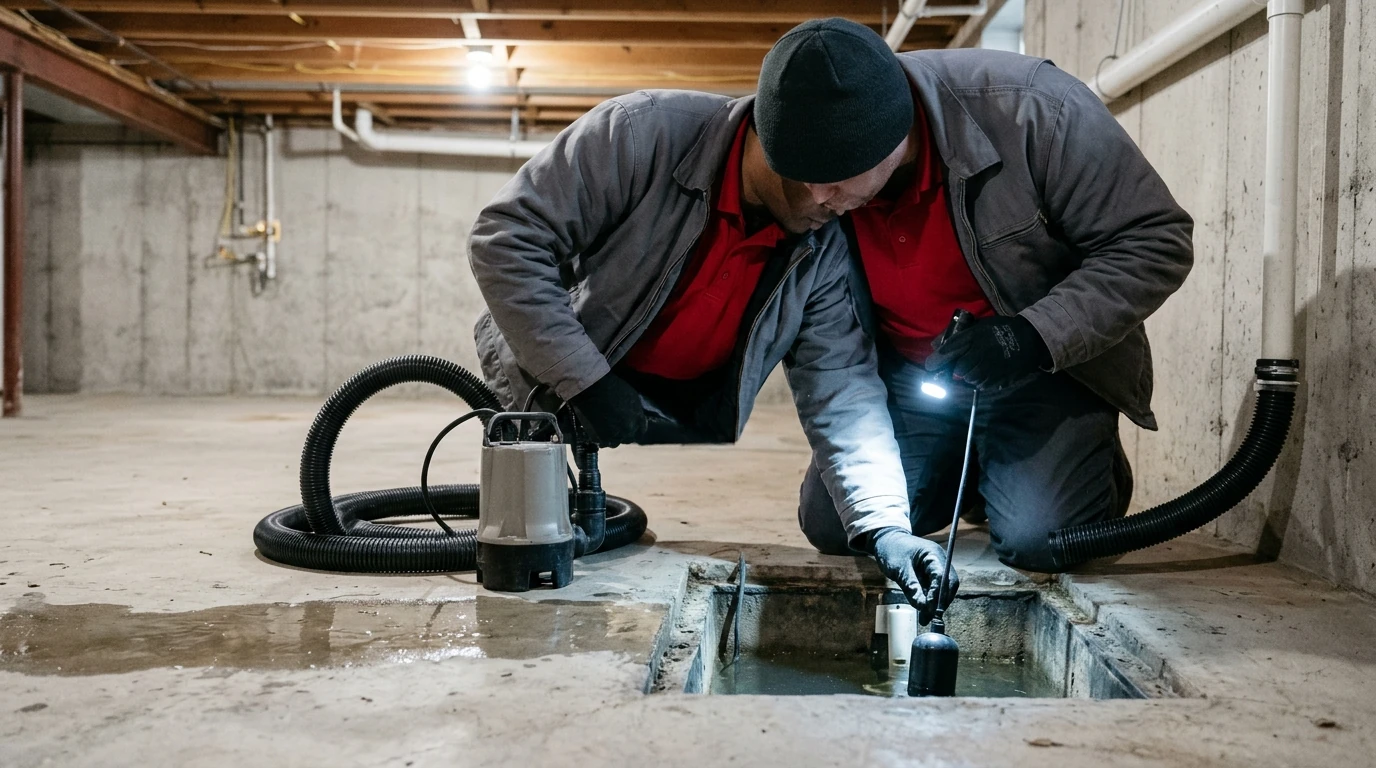
Sump pump failure. If the pump itself died (tripped breaker, broken float, worn-out motor), a plumber can usually get it running again same-day. But the water already pooled on the floor still needs extraction and drying, which is restoration work, not plumbing work. Most Auburn homeowners end up calling both, or calling a single restoration contractor that can coordinate the plumbing fix and start water removal in the same visit.
Heavy rain or snowmelt groundwater. When water is seeping in through foundation walls or floor seams during or after a storm, that’s not a plumbing problem at all. It’s hydrostatic pressure pushing groundwater through cracks and cove joints. A plumber can’t fix grading or a saturated water table; a restoration crew extracts the water while a contractor evaluates longer-term fixes like exterior drainage or a sump system.
Sewer or drain backup. If water is coming up through a floor drain or backing up from a toilet or sewer line, treat it as contaminated, also called Category 3 or “black water” under the ANSI/IICRC S500 standard. This isn’t a mop-and-dry situation. Porous materials that touched it, carpet, baseboard, drywall, insulation, usually need to come out rather than be dried in place, and the area needs antimicrobial treatment. A sewage cleanup specialist handles this, not a general plumber and not a wet-vac.
What happens when you call a restoration company for a flooded basement?
The first call is a short triage conversation: what’s the water source, is the power safe, and how long has it been standing. That tells the crew what equipment and PPE to bring before they arrive.
On-site, the work generally runs in this order: confirm the source is controlled, extract standing water with pumps and truck-mounted vacuums, remove materials that can’t be dried (soaked drywall, carpet pad, insulation), then set air movers and dehumidifiers to dry what’s left. A moisture meter checks framing and subfloor daily until readings return to a dry standard, which usually takes several days. If the water was Category 2 or 3, the crew applies antimicrobial treatment before closing the space back up.
Have ready, if you can grab it before the crew arrives: the approximate time the flooding started, a few photos of the standing water, and your insurance information if you plan to file a claim.
Will homeowners insurance cover a flooded basement in Auburn?
It depends entirely on where the water came from, and this is the part people get wrong most often. A standard homeowners policy typically covers sudden, accidental water damage from inside the home, like a burst pipe or a failed supply line, but it doesn’t automatically cover groundwater, surface flooding, or sewer backup.
Flooding from heavy rain, snowmelt, or rising groundwater generally falls under flood insurance, not a standard homeowners policy. That means a separate NFIP or private flood policy, not your base coverage. A failed sump pump and a sewer backup are both typically excluded too, unless you’ve added a specific water backup or sump overflow endorsement. Check your policy’s declarations page for that endorsement before assuming either scenario is covered.
Whatever the cause, document everything before cleanup starts: photos, a short video walkthrough, and a list of anything the water touched. That documentation protects whatever claim you do have, covered or not.
A basement flood rarely stays confined to just water. A failed sump pump can mean a plumbing fix, water extraction, and sometimes mold remediation if the basement sat wet for more than a day or two, since mold can begin growing within 24 to 48 hours on wet materials. The “One Call Does It All” approach exists for exactly this reason: one phone call covers the plumbing fix, the extraction and drying, and any rebuild, so you’re not coordinating three separate contractors while standing in a wet basement. For the full first-day sequence, see What To Do in the First 24 Hours After Water Damage, or start with a basement flooding cleanup assessment.
Need help now? Call QCI Restoration at (508) 756-8800.