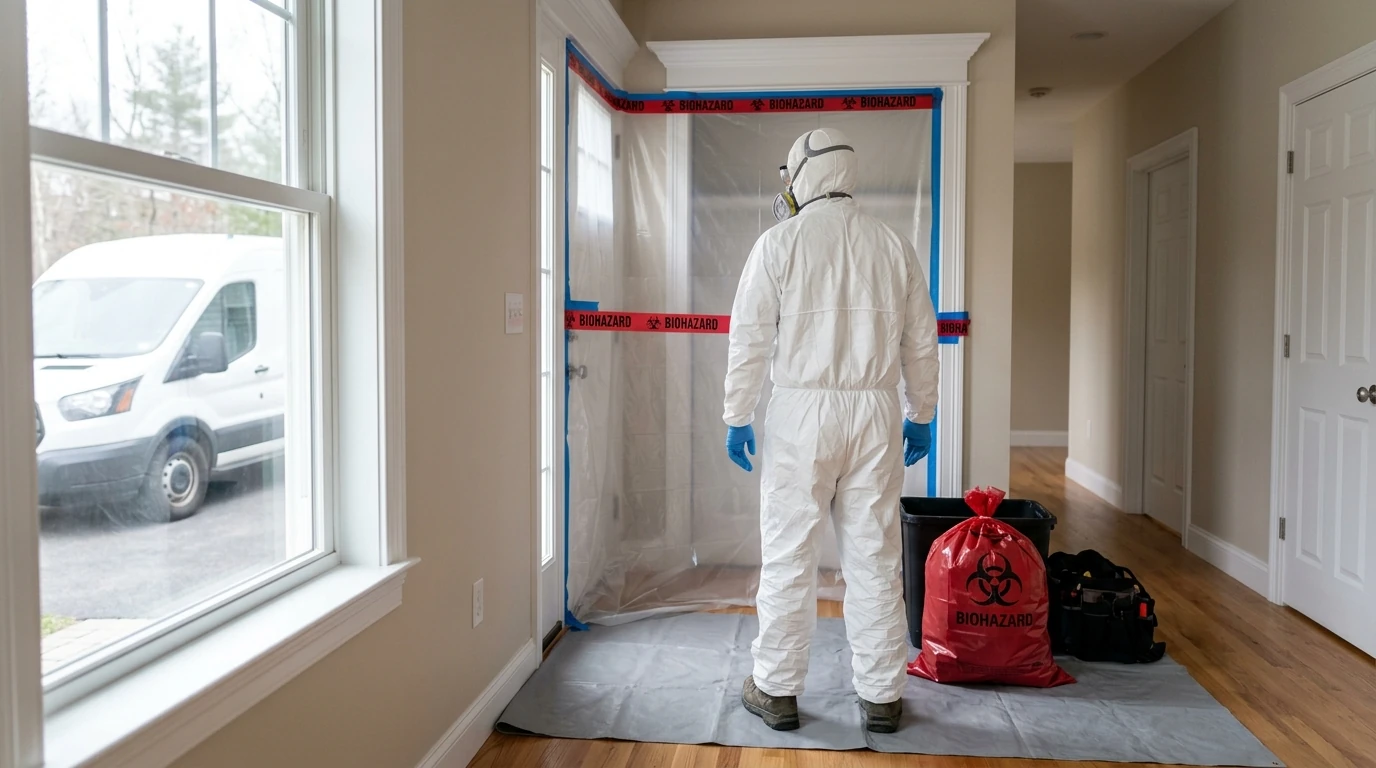
TL;DR: For biohazard cleanup in Auburn, MA, including an unattended death, a crime scene, sharps, drug residue, or a heavy rodent infestation, call QCI Restoration at (508) 756-8800. The company runs a 24/7 line and holds a 4.6 Google rating across 129 reviews. Police or the medical examiner handle the scene first when one is involved; the cleanup crew comes in once the property is released, so a homeowner never has to touch contaminated material themselves.
If you just found blood, a decomposition odor, old needles, or a thick layer of rodent droppings in an Auburn home or rental unit, the first call matters more than people expect. Part of what’s in front of you may be a job for 911 or the police. The rest, once law enforcement clears the scene, is biohazard cleanup work that needs trained hands, the right protective equipment, and proper disposal, not a mop and a trash bag.
Who do you call first, 911, the landlord, or a cleanup company?
Call 911 first for any active emergency, an unattended death, a crime scene, or anything involving a weapon or an unknown substance. A biohazard cleanup company is called only after police or the medical examiner have released the scene.
Until that release happens, the property is treated as part of an investigation and should not be touched or cleaned, even if that delays things by a day. Once the scene is released, responsibility for cleanup generally falls to whoever holds the property: the homeowner in a single-family house, the landlord in a rental unit, or a property manager in a multi-unit building. Lease terms and local housing rules affect who pays, so tenants should contact their landlord or property manager right away instead of starting to clean on their own.
What should you never touch or try to clean yourself?
Never touch blood, bodily fluids, needles, or drug residue with bare hands or household cleaners. These materials can carry bloodborne pathogens like hepatitis B, hepatitis C, and HIV, and typical household disinfectants aren’t formulated to neutralize them. The OSHA bloodborne pathogens standard exists specifically because this kind of exposure is a real occupational hazard, not just an unpleasant chore.
Sharps and needles found in a home deserve the same caution. If you must move one away from children or pets before help arrives, use a rigid container, never a soft bag, and never your fingers. Drug residue, including fentanyl powder, poses inhalation and contact risk and is typically handled by a technician wearing a full-face respirator, not a dust mask.
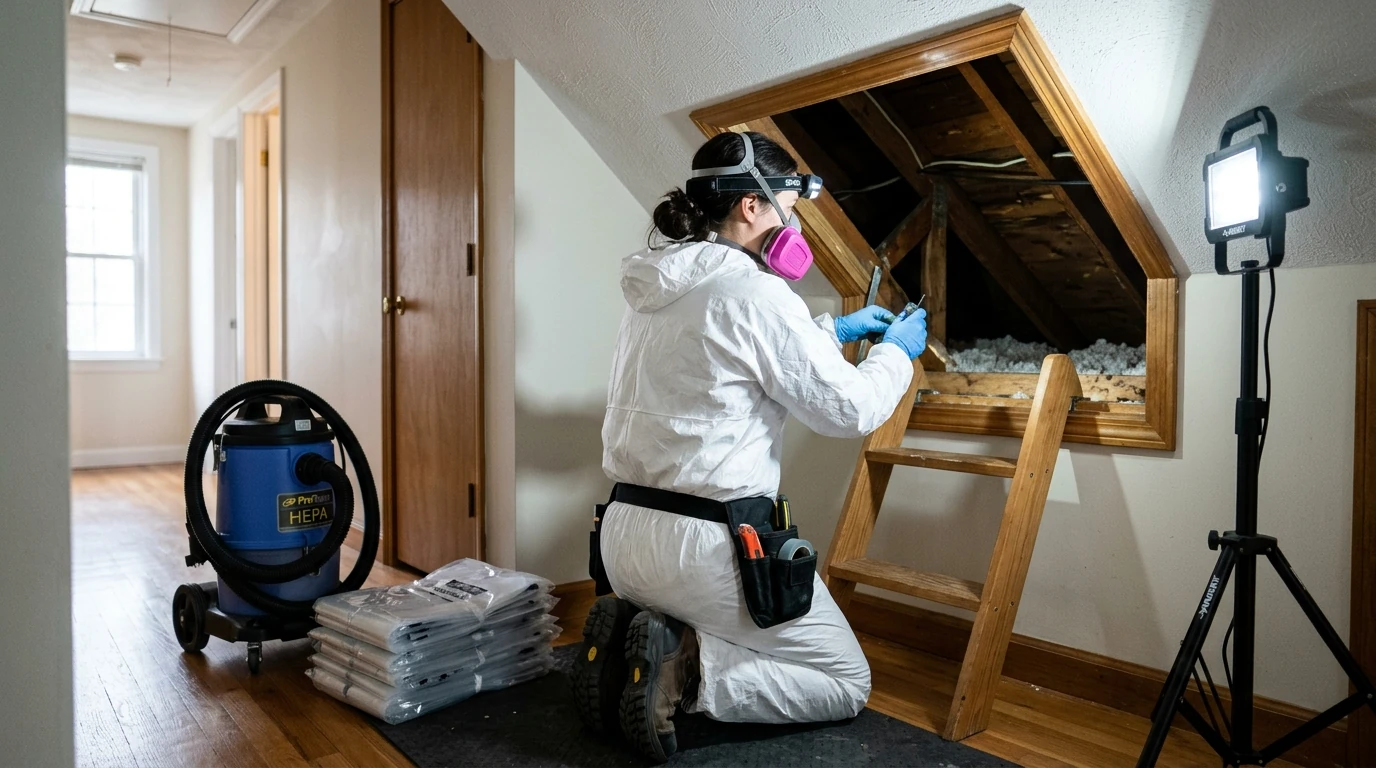
What about rodent droppings and nesting material in an attic, basement, or garage?
Dry rodent droppings and nesting material can carry hantavirus, a serious respiratory illness, so the CDC recommends against sweeping or vacuuming them dry. The dust that kicks up when dry droppings get disturbed is exactly how the virus reaches people.
The safer sequence: ventilate the space for at least 30 minutes before entering, wear rubber gloves and an N95 respirator at minimum, and mist the droppings and nesting material with a disinfectant solution before any contact to keep dust down. For a heavy infestation across an attic, crawl space, or garage, professional containment and HEPA filtration handle it faster and more safely than a weekend DIY attempt.
What does the first visit look like?
The first visit is an assessment, not a demolition. A technician inspects the affected area, identifies what’s contaminated versus salvageable, sets up containment, and explains the disposal process before any work starts.
In practice that means: a walkthrough in full protective equipment, poly-sheeting containment to stop cross-contamination into clean rooms, removal and disposal of affected porous materials like carpet and drywall, disinfection of non-porous surfaces, and documentation of everything removed. Work in this category generally follows the ANSI/IICRC S540 Standard for Trauma and Crime Scene Cleanup, which sets the containment, PPE, and disposal benchmarks for this kind of job. If the scene also involves standing sewage rather than trauma residue, see Who to Call for a Sewage Backup in Auburn, MA for that specific process.
What should you photograph, and who do you need to notify?
Photograph the affected area from the doorway before anything is touched, then again after cleanup is complete, without getting close enough to touch anything. After that, notify your insurance carrier, and if you rent, your landlord or property manager, before cleanup begins.
Coverage for biohazard cleanup depends on the cause and the specific policy. Some standard homeowners policies cover cleanup tied to a covered peril, like a fire or certain accidents, while others exclude cleanup linked to a death, a crime, or long-term neglect. Ask your adjuster directly before work starts, and get a written scope of work from the cleanup company to support whatever claim you file.
Biohazard situations rarely stay contained to one issue. A property with sharps or trauma residue often also needs odor treatment, and a rodent infestation frequently means contaminated insulation that has to come out before anything else gets rebuilt. One Call Does It All means the crew handling biohazard cleanup also covers trauma scene cleanup, odor removal, and sewage cleanup when a job calls for more than one service, so an Auburn homeowner isn’t coordinating three separate contractors mid-crisis. The same process extends to nearby Worcester as well.
About QCI Restoration
QCI Restoration serves Auburn, Worcester, and the surrounding Central Massachusetts communities from its Auburn, MA headquarters, running a 24/7 line for emergency calls. The company holds a 4.6 Google rating across 129 reviews and covers biohazard cleanup, trauma scene cleanup, sewage cleanup, and odor removal, alongside water, fire, and storm restoration, under one roof.
Need help now? Call QCI Restoration at (508) 756-8800.