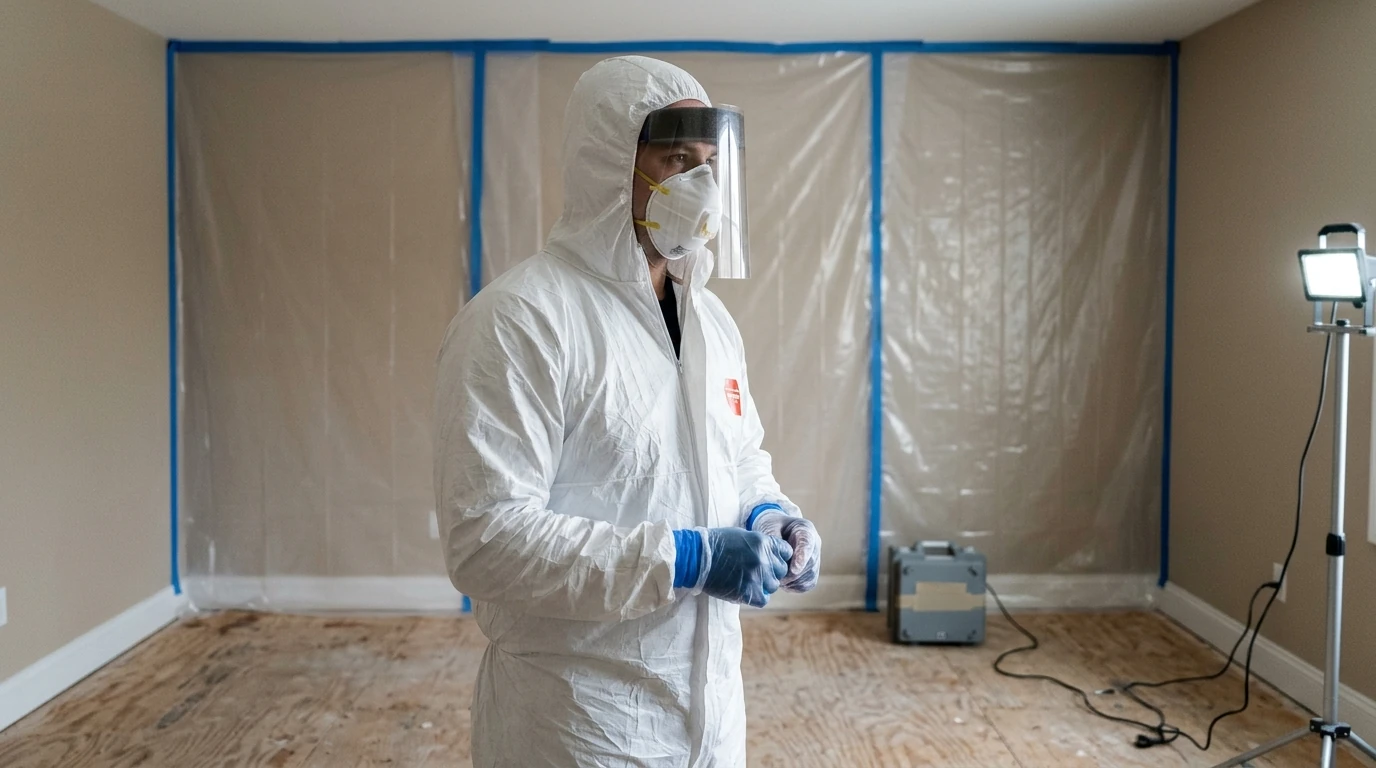
TL;DR: Biohazard cleanup cost in Auburn, MA isn’t a flat number. It depends on how much area is affected, how many porous materials (carpet, drywall, subflooring) have to be removed, how deep the contamination goes, and how much regulated waste has to be packaged and transported for disposal. Most companies price these jobs after an on-site assessment, not over the phone, because every scene is different.
If you’re dealing with the aftermath of an unattended death, a serious accident, or another biohazard situation in an Auburn home or rental property, you’re probably trying to get a sense of cost before anyone shows up. That’s reasonable. This isn’t a job with a standard menu price, and anyone who quotes you a firm number sight unseen is guessing. What follows is how the pricing actually works, so you know what questions to ask and what a fair estimate looks like.
What Factors Determine Biohazard Cleanup Cost?
The price comes down to five variables: affected area, material porosity, contamination depth, waste volume, and the PPE and containment the job requires. Change any one of those and the estimate moves.
A small, contained area on a hard, non-porous surface (tile, sealed concrete) is the least expensive scenario because it can usually be disinfected and cleared without major demolition. The cost climbs when contamination has soaked into carpet, padding, subflooring, or drywall, because porous materials that have absorbed blood or other body fluids generally can’t be sanitized and have to be removed and replaced rather than cleaned.
Depth matters too. Surface contamination is one thing; contamination that has traveled between floor levels, into wall cavities, or through subflooring into a basement below is a bigger job with more demolition and more disposal volume. Time since the incident also factors in. Longer exposure means deeper saturation into materials and, often, more odor to resolve afterward.
| Cost Driver | Why It Moves the Price |
|---|---|
| Size of affected area | More square footage means more labor hours and more disposal volume |
| Porous vs. non-porous materials | Porous materials (carpet, drywall, wood subfloor) usually must be removed, not cleaned |
| Contamination depth | Fluids that penetrate flooring or wall cavities add demolition and drying work |
| Waste volume | More regulated waste means more packaging, transport, and disposal cost |
| PPE and containment level | Higher-risk scenes require more protective equipment and stricter containment |
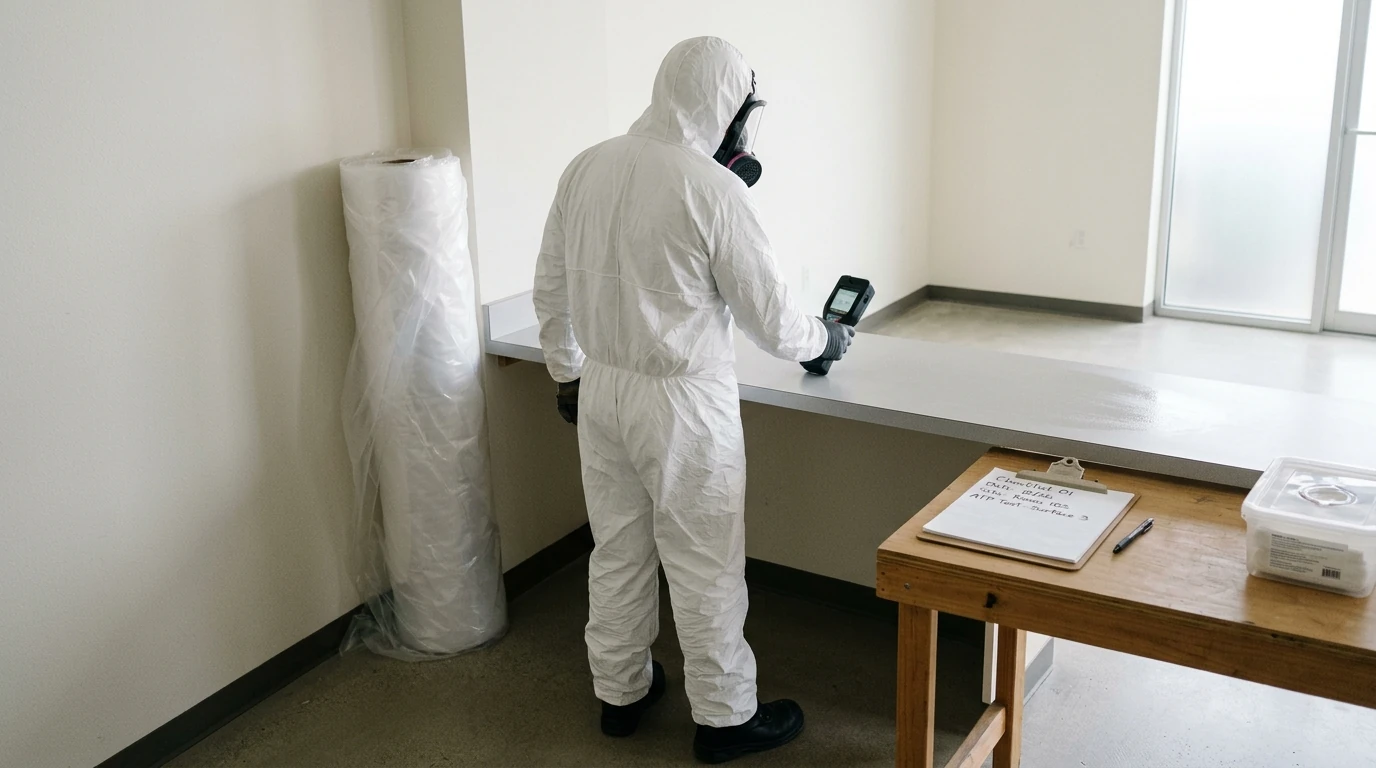
| Clearance testing | Verifying the space is safe before reconstruction starts adds a line item |
Because of all this, a legitimate estimate for biohazard cleanup comes after a technician has walked the space, not before.
Hourly vs. Per-Job Pricing: Why Do Quotes Differ?
Some companies bill biohazard cleanup hourly; others quote a flat per-job price after assessing the scene, and that’s the main reason two estimates for the same situation can look different. Neither approach is inherently wrong, but they shift the risk differently.
Hourly pricing can work in the homeowner’s favor on a small, straightforward job that wraps up quickly. It can work against them if the job turns out to be more involved than expected once materials are opened up and inspection reveals deeper saturation. Flat per-job pricing, issued after an on-site walk-through and a written scope, gives you a number you can plan around and compare against other estimates on equal footing.
When comparing quotes, ask what’s included: PPE and containment, waste transport and disposal fees, demolition of affected materials, disinfection, and any deodorization or clearance testing. A quote that’s missing one of those line items may look cheaper but end up costing more once the work actually starts.
How Is Regulated Waste From a Biohazard Scene Disposed Of?
Materials contaminated with blood or other potentially infectious materials are handled as regulated medical waste, which means specific packaging, labeling, and transport rules apply, not a regular dumpster pickup. Crews working these scenes use leak-proof, labeled containers and work with waste haulers for final disposal.
OSHA’s bloodborne pathogens standard sets the baseline for how workers protect themselves and handle contaminated materials on these jobs, covering everything from PPE requirements to proper containment and disposal procedures. Massachusetts has its own rules on hazardous and biomedical waste handling as well, which is part of why this work costs more than a standard cleaning job: the waste itself requires special handling from the moment it’s bagged to the moment it’s processed at a facility. That compliance cost shows up in the final price, and it’s not optional.
What Happens After Cleanup: Odor Removal and Clearance Testing?
Odor removal and a final clearance check are typically the last steps, confirming the space is safe and livable before anyone moves materials back in or reconstruction begins. Biological contamination often leaves an odor that lingers in porous surfaces even after visible material is removed, which is why odor removal is frequently its own line item rather than something bundled automatically into the cleanup fee.
Clearance testing (sometimes a visual and olfactory final walk-through, sometimes supplemented with ATP surface testing) verifies the space meets a safe standard before it’s released back to the homeowner or property manager. Skipping this step to save money is a common mistake: if contamination or odor resurfaces after reconstruction has already started, the rework costs far more than the clearance step would have.
Sewage-contaminated scenes sometimes overlap with biohazard situations, particularly drain or sewer backups that carry contaminated water into a living space. If that’s part of your situation, our guide to sewage backup cleanup cost in Auburn, MA breaks down how that water is categorized and priced separately from biological contamination.
Will Homeowners Insurance Help Cover the Cost?
Homeowners insurance may help with biohazard cleanup when the situation stems from a sudden, covered event, but coverage varies by policy and insurer, so there’s no guarantee. Some policies include specific language for trauma or crime scene cleanup; others fold it into broader property damage coverage, and some exclude it depending on the circumstances.
The Insurance Information Institute’s overview of standard homeowners coverage is a useful starting point for understanding how policies are generally structured, but the only way to know what your specific policy covers is to call your agent or adjuster and ask directly. Keep documentation: photos, a written scope of work, and itemized invoices all support a claim if you decide to file one.
What About Rebuilding After Contaminated Materials Are Removed?
Once contaminated flooring, drywall, or subflooring is removed, the space needs to be rebuilt before it’s usable again, and that rebuild is a separate cost from the cleanup itself. Depending on what was removed, that can mean new flooring, drywall and paint, or in more extensive cases, framing repairs.
This is where coordinating multiple contractors usually turns into a headache: one company handles the biohazard work, another handles demolition, a third handles the rebuild, and nobody is accountable for the whole timeline. QCI Restoration handles biohazard cleanup, trauma scene cleanup, and the reconstruction that follows under one roof, which is the idea behind “One Call Does It All”: one phone call covers the cleanup, the disposal, and the rebuild from start to finish, instead of a homeowner managing three separate vendors during an already difficult week.
If you’re facing a biohazard situation in Auburn or anywhere in Worcester County, the most useful first step is a discreet, on-site assessment that gives you a written scope before any work begins. Call QCI Restoration at (508) 756-8800 to schedule one; the company’s crews are available 24/7.
About QCI Restoration
QCI Restoration serves Auburn, MA and the surrounding Worcester County communities, with crews available 24/7. The company handles biohazard and trauma scene cleanup, water and fire damage restoration, mold remediation, sewage cleanup, and the reconstruction that follows, all under one point of contact.
Video Transcript
Wondering what biohazard cleanup actually costs for a home or rental property in Auburn, Massachusetts? There’s no flat rate, and here’s exactly why. Every scene is different, so a responsible contractor prices the job after walking through your home in person, not over the phone. Five things drive the price: the size of the affected area, material type, contamination depth, waste volume, and required protective equipment. Hard, non-porous surfaces like tile or sealed concrete usually cost less, because they can often be disinfected instead of torn out. Carpet, drywall, and wood subflooring that have absorbed fluids usually can’t be sanitized, they have to be removed and replaced entirely. Contaminated materials count as regulated medical waste, requiring special packaging, labeling, and transport under strict state and federal safety rules. Some contractors bill hourly for smaller jobs, others quote a flat price after an on-site walkthrough, ask which method you’re getting. When comparing quotes, ask what’s included: protective equipment, waste disposal, demolition, disinfection, and any odor or clearance testing. After cleanup, odor removal and a final clearance check confirm your space is truly safe before reconstruction or move-back begins. Skipping that clearance step to save money often costs more later. Call QCI Restoration at (508) 756-8800 to schedule an assessment.