TL;DR: The best sewage cleanup company for an Auburn, MA property is one that treats every backup as Category 3 black water from the first call: full PPE, contained work areas, and EPA-registered disinfection, not just a shop-vac and box fans. Ask about IICRC S500 training, who documents the loss for your insurance adjuster, and whether the same crew can also handle the repair that follows. A true start-to-finish company saves you from coordinating multiple contractors during an already stressful event.
If your basement floor drain backed up overnight, or a clogged main line pushed sewage up through a toilet near the Auburn Mall or off Route 12, you’re probably searching for the best sewage cleanup company in Auburn because you need someone today, not next week. A plumber can clear the clog that caused the backup. A carpet cleaner can shampoo a rug. Neither is equipped, or trained, to safely remove contaminated water, dry the structure, and document the loss the way a real sewage cleanup company has to.
What Makes a Sewage Cleanup Company Different From a Plumber or Carpet Cleaner?
A sewage cleanup company is equipped and trained to handle Category 3 water, the IICRC’s term for grossly contaminated water that includes sewage, toilet overflow beyond the trap, and backups from floor drains. A plumber fixes the pipe; a carpet cleaner shampoos surfaces. Neither removes contaminated porous materials or disinfects a structure to a recognized standard.
Under the ANSI/IICRC S500 standard, Category 3 water is treated differently than a clean supply-line leak. Porous materials that absorbed the water, drywall, carpet pad, insulation, often get removed rather than dried in place, because drying alone doesn’t neutralize what’s in the water. A plumber’s job ends when the clog clears. A carpet cleaner’s equipment isn’t built to extract and dispose of contaminated water safely. A sewage cleanup crew’s job starts where theirs stops: containment, extraction, demolition of affected materials, and disinfection.
What Containment, PPE, and Disinfection Steps Should a Crew Follow?
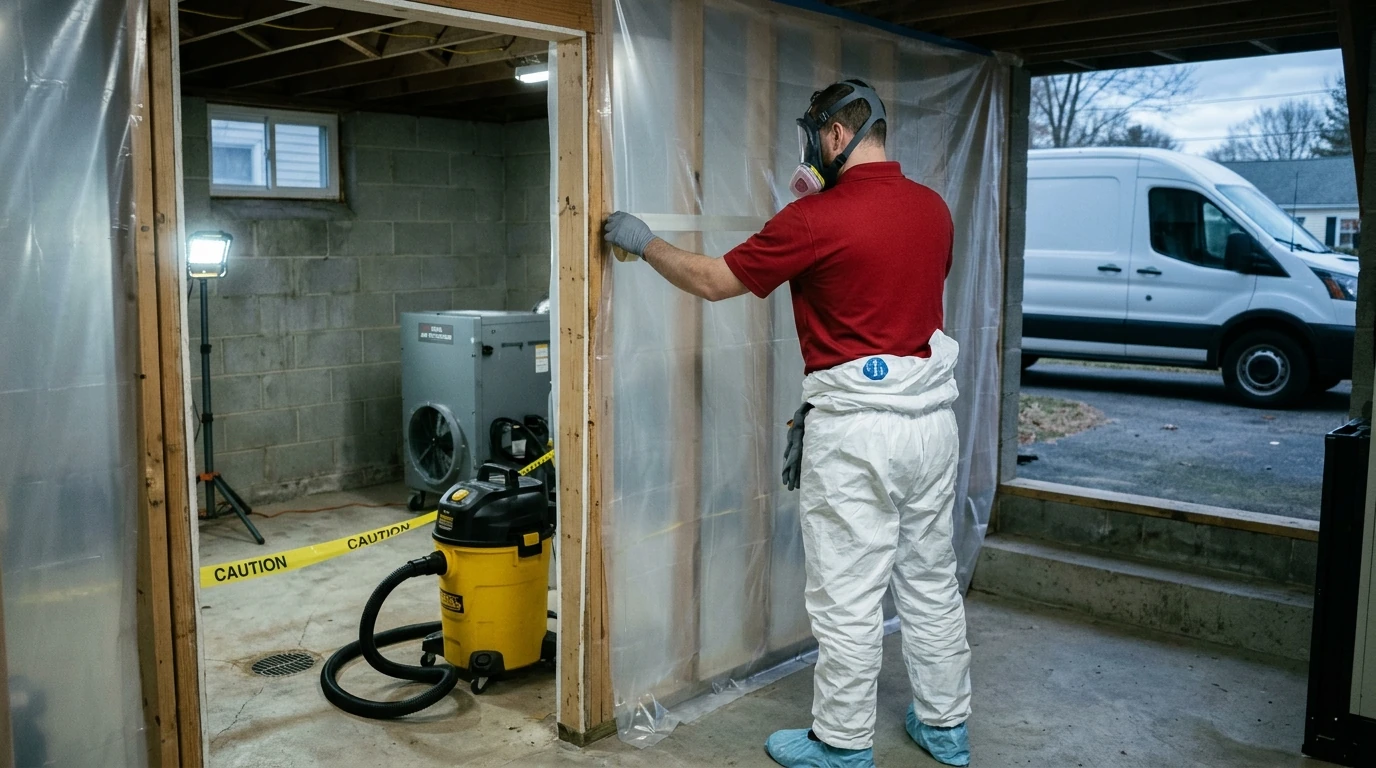
A crew handling a sewage backup should contain the affected area, wear full personal protective equipment, and disinfect every surface the water touched before drying begins. Skipping any of these steps leaves contamination behind even if the floor looks dry.
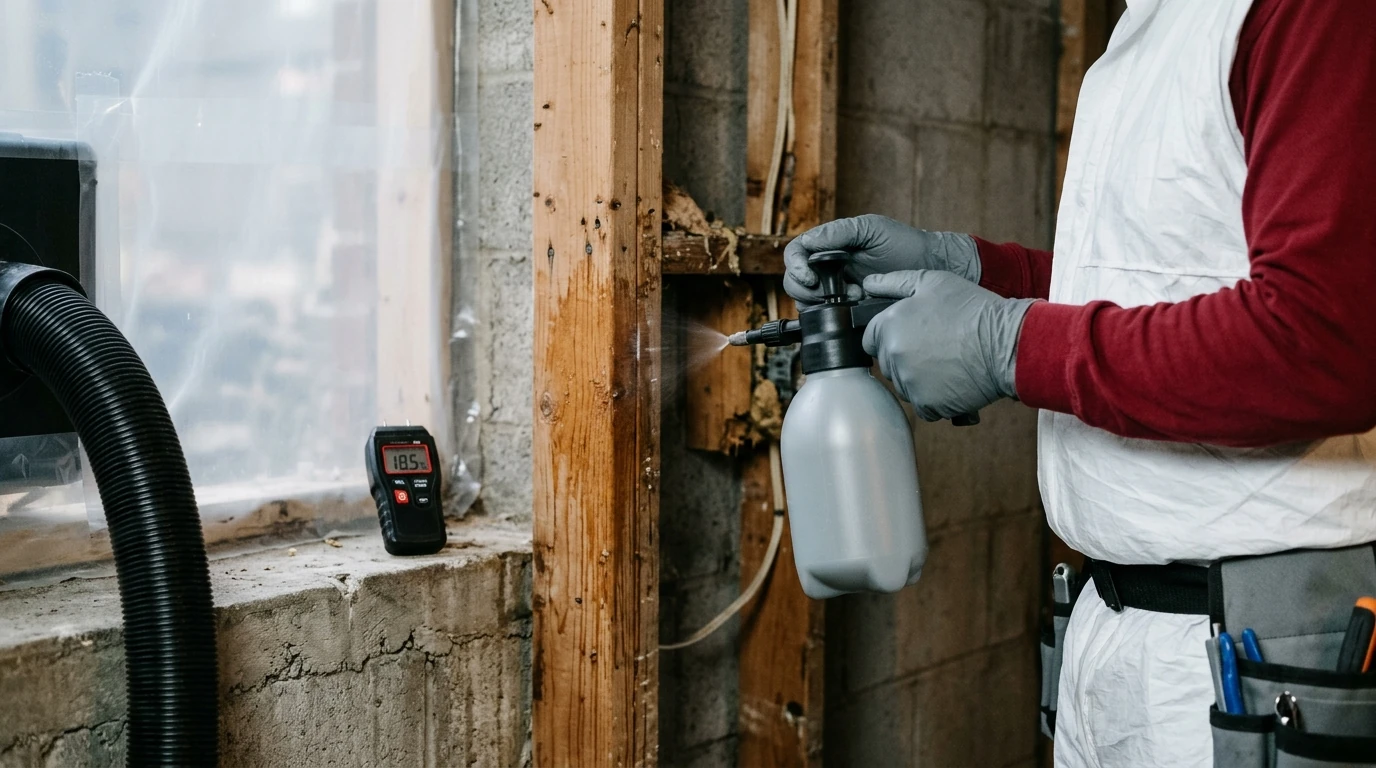
Containment means sealing off the affected room with poly sheeting so contaminated air and debris don’t spread to the rest of the home. PPE for Category 3 water typically includes a Tyvek suit, nitrile gloves, boot covers, and a respirator, not just rubber gloves and a mask. Once standing water is extracted, the crew should apply an EPA-registered antimicrobial to hard surfaces and remove porous materials that can’t be reliably disinfected. Because mold can begin growing on wet materials within 24 to 48 hours, the containment and drying phase has to move fast, and air scrubbers or HEPA filtration should run throughout to manage airborne particulates during demolition.
What Certifications and Training Should You Ask About?
Ask whether the technicians arriving at your home have training specific to water damage and sanitation, since that’s the industry standard for how Category 3 losses should be handled. The IICRC sets the S500 water restoration standard that governs categorization, containment, and drying documentation across the restoration industry.
You don’t need to memorize the standard yourself. You just need to ask the company directly: “Are your technicians trained to the S500 standard for Category 3 water?” A company that can answer specifically, rather than vaguely gesturing at “we’re certified,” is one that actually trains to it. Also ask who is physically on-site running the job, not just answering the phone, since sewage cleanup is a hands-on, same-day process, not something scheduled a week out.
Who Handles the Insurance Paperwork, and What Will Your Policy Actually Cover?
Most standard homeowners policies do not automatically cover sewer or drain backups, even though they cover other sudden water losses; that coverage usually requires a separate water backup (sewer/sump) endorsement added to the policy. According to the Insurance Information Institute, coverage for water damage depends heavily on the source and whether specific endorsements were purchased, so it’s worth calling your agent before assuming a backup is covered.
Because coverage is conditional, documentation matters more here than on a typical burst-pipe claim. A good sewage cleanup company photographs the affected area before demolition, logs moisture readings throughout drying, and provides a written scope of work your adjuster can review. Ask upfront who writes that documentation and whether it’s included in the cleanup cost or billed separately. If the company can’t describe its documentation process clearly, that’s a sign the claim paperwork will land on you.
What Should You Ask Before You Sign a Work Authorization, and Who Should You Call in Auburn?
Before signing anything, ask for a written scope of work, confirm whether the estimate is preliminary or final, and ask who handles both the cleanup and the repair that follows, drywall, flooring, and any rebuild. A work authorization that’s vague about scope or doesn’t name a point of contact is a red flag, regardless of how fast the crew can arrive.
Specifically: ask what Category 3 protocols they follow, ask for their documentation process in writing, and ask whether the same company handles the full job from extraction through reconstruction, or whether you’ll need to hire a separate contractor for the rebuild. For Auburn and Greater Worcester homes, from triple-deckers near downtown to Cape-style homes off Route 20, QCI Restoration is a local, 24/7 option built around that single-contractor model: one phone call covers mitigation, sewage cleanup, disinfection, and the repair that follows, which is the idea behind the company’s “One Call Does It All” positioning. For a broader checklist that applies beyond sewage specifically, see our guide on choosing a restoration company in Auburn.
A sewage backup isn’t a job to shop around on slowly. Get the containment and disinfection right the first time, keep the documentation your insurer will ask for, and confirm the crew showing up is actually trained for Category 3 water, not just equipped for a flood.
About QCI Restoration
QCI Restoration is based in Auburn, MA, and serves Greater Worcester and MetroWest communities including Worcester, Shrewsbury, Westborough, and Southborough. The company operates 24/7 and holds a 4.5 Google rating from 123 reviews. Its crews handle water damage restoration, sewage cleanup, biohazard cleanup, odor removal, mold remediation, and the reconstruction that follows a loss, all coordinated under one contract from first call to final walkthrough.